


If you've ever eaten South Indian food and wondered where that deep, nutty, citrusy aroma comes from - it's probably curry leaves. Curry leaves are one of those ingredients that feel mysterious outside of Indian kitchens but completely essential inside them. They're an herb that adds a unique, slightly citrusy, and nutty taste to Indian curries, stews, and chutneys. This guide will tell you everything you need to know from where to find them to how to use and store them.
Jump to:
🌿 What Are Curry Leaves?
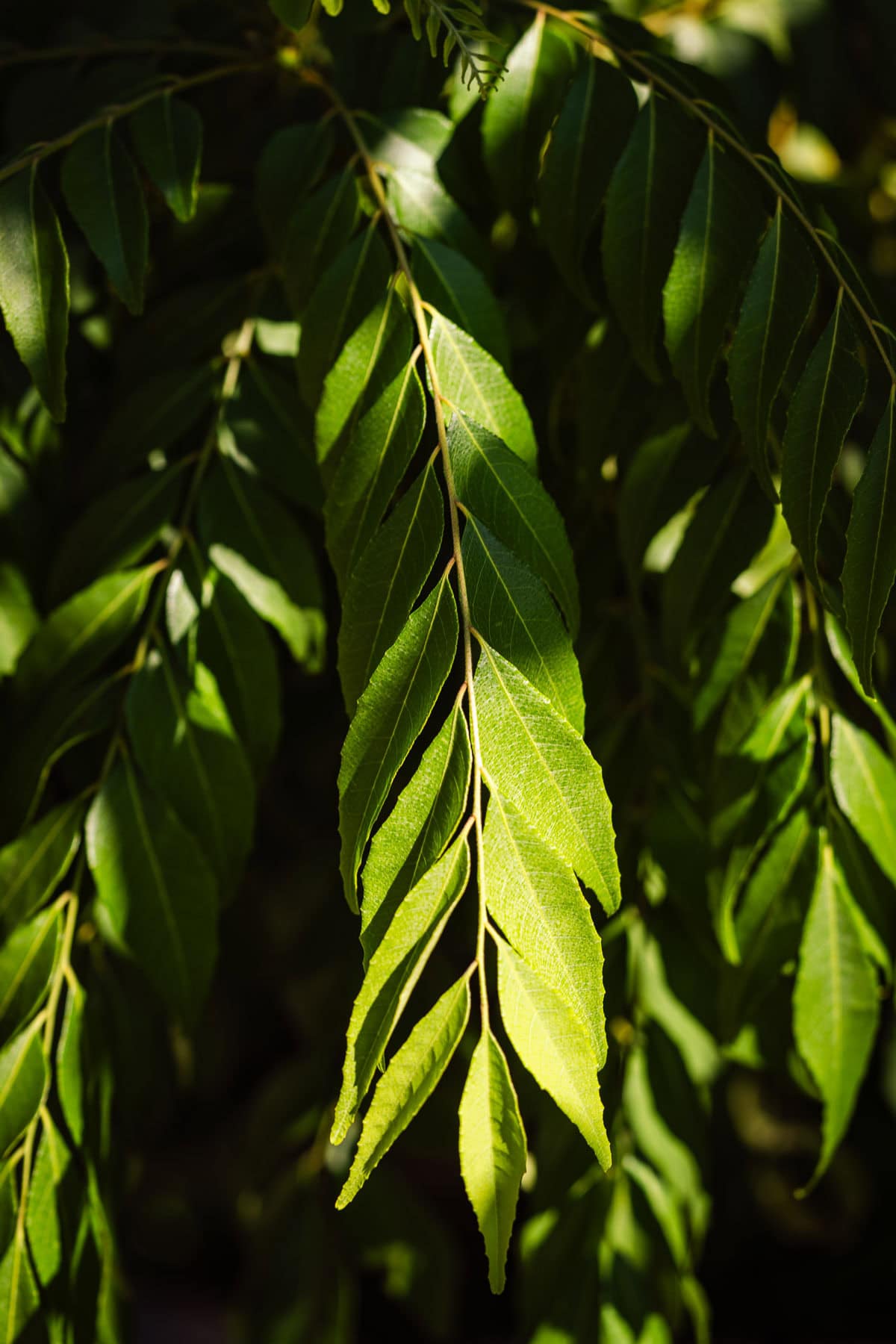
Curry leaves, also referred to as kadi patta, come from the tree Murraya koenigii, a tropical to subtropical plant native to the Indian subcontinent.
The leaves are deep green, somewhat glossy, and intensely aromatic. You can walk by a tree and get a whiff of it. It's typically used fresh for a highly intense flavor profile and aroma, but can be dried.
To clear up some of the biggest misconceptions:
- They are not related to curry powder, which is a mixture of several spices like coriander, cumin, cinnamon, turmeric, etc.
- They are not similar to bay leaves, which can be more cinnamon-y.
A Brief History of Curry Leaves
Curry leaves have been used in Indian cooking for over 2,000 years, especially in South Indian regions like Tamil Nadu, Kerala, Karnataka, and Andhra Pradesh.
They're deeply tied to Ayurvedic wellness traditions and everyday home cooking.
Historically, curry leaves weren't luxury ingredients. They were backyard ingredients. Almost every traditional South Indian home had a curry leaf tree growing outside. And that's important culturally - this is amma's kitchen food, yet it feels special to use this ingredient.
What Do Curry Leaves Taste Like?
When raw, curry leaves are mild, slightly bitter, and grassy. Tempering the leaves in a fat, much like using sage, is where the magic happens. The flavor becomes nutty, herbaceous, citrusy, slightly smoky, savory, and indescribably aromatic.
The flavor blooms when added to hot oil - especially when it's tempered with mustard seeds and cumin seeds. If you've made tadka and felt like something was missing… it was probably curry leaves.
How to Find Curry Leaves in the U.S.
You'll find them at:
- Indian grocery stores (fresh in the produce section). They are typically a few stems in a plastic bag for $1.
- Some Middle Eastern markets
- Occasionally at Asian markets
- Rarely at standard American grocery stores
If you live in a subtropical or tropical climate, it can be grown in ground or in a pot as a small evergreen tree. They thrive in the heat. When harvesting, take the whole stem and not just a few leaves to encourage branching.
When purchasing, look for bright green leaves, no yellowing, no black spotting, and firm stems. Avoid stems that are wilted, dry, or pale.
How to Use Curry Leaves
1. Tadka (Tempering)
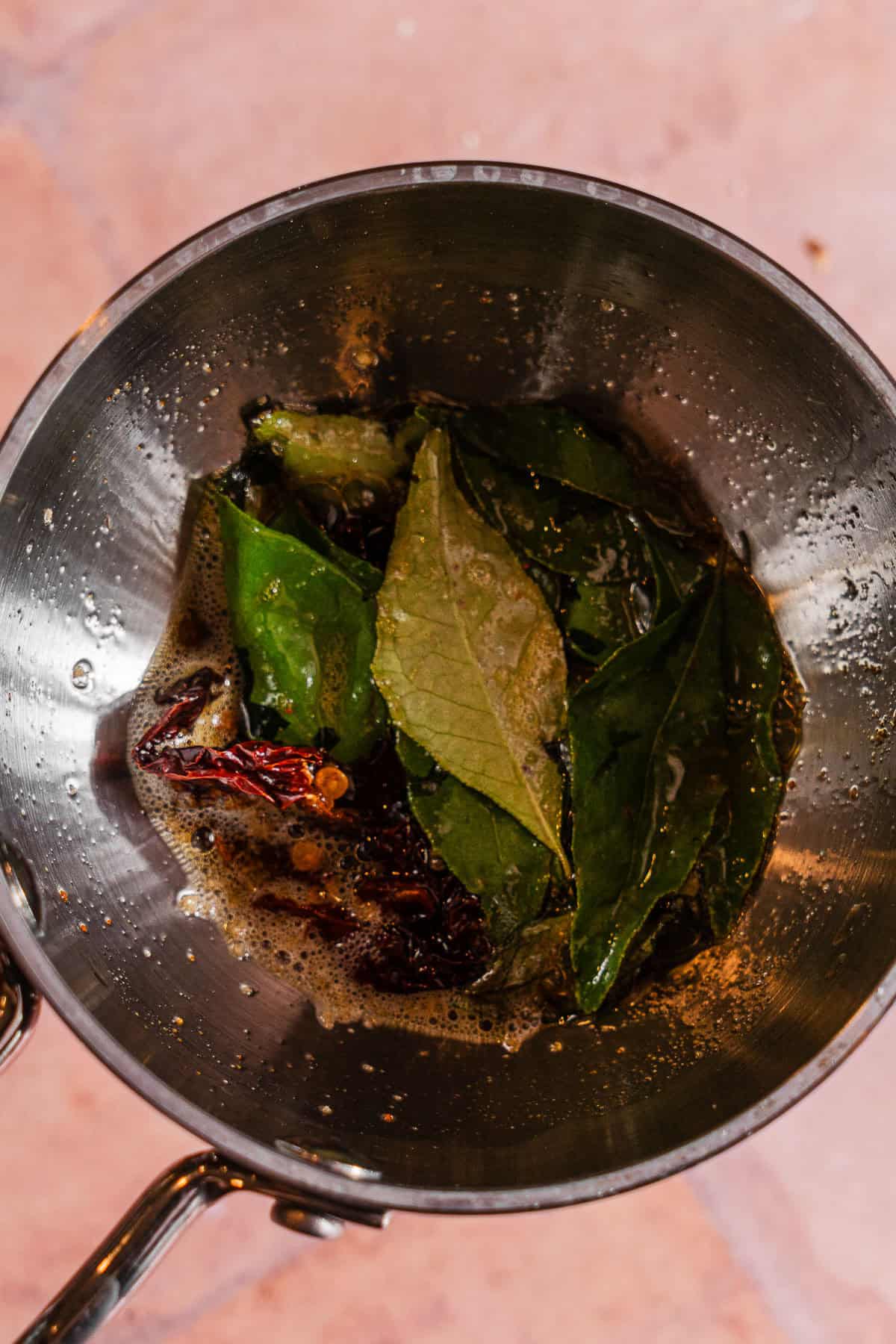
This is the most traditional method that uses heat to release their essential oils. Start by washing them and completely patting them dry.
- Heat 1-2 tablespoons of oil or ghee
- Add mustard seeds or cumin seeds. Let them sputter for 30 seconds
- Add dried chilis or chili powder for 30 seconds
- Add curry leaves. They will crisp up and darken a bit in color. ⚠️ Be careful! The moisture content may cause it to sputter and splash hot oil. Remove off heat for a few seconds if needed.
- Pour over dal or sabzi
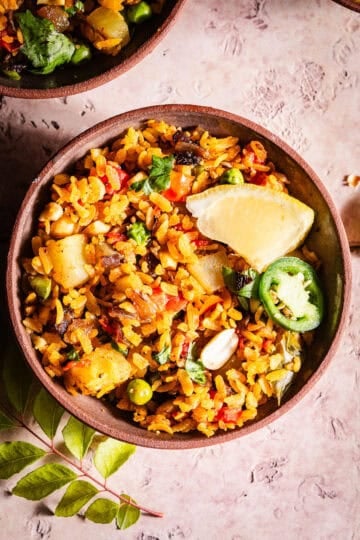
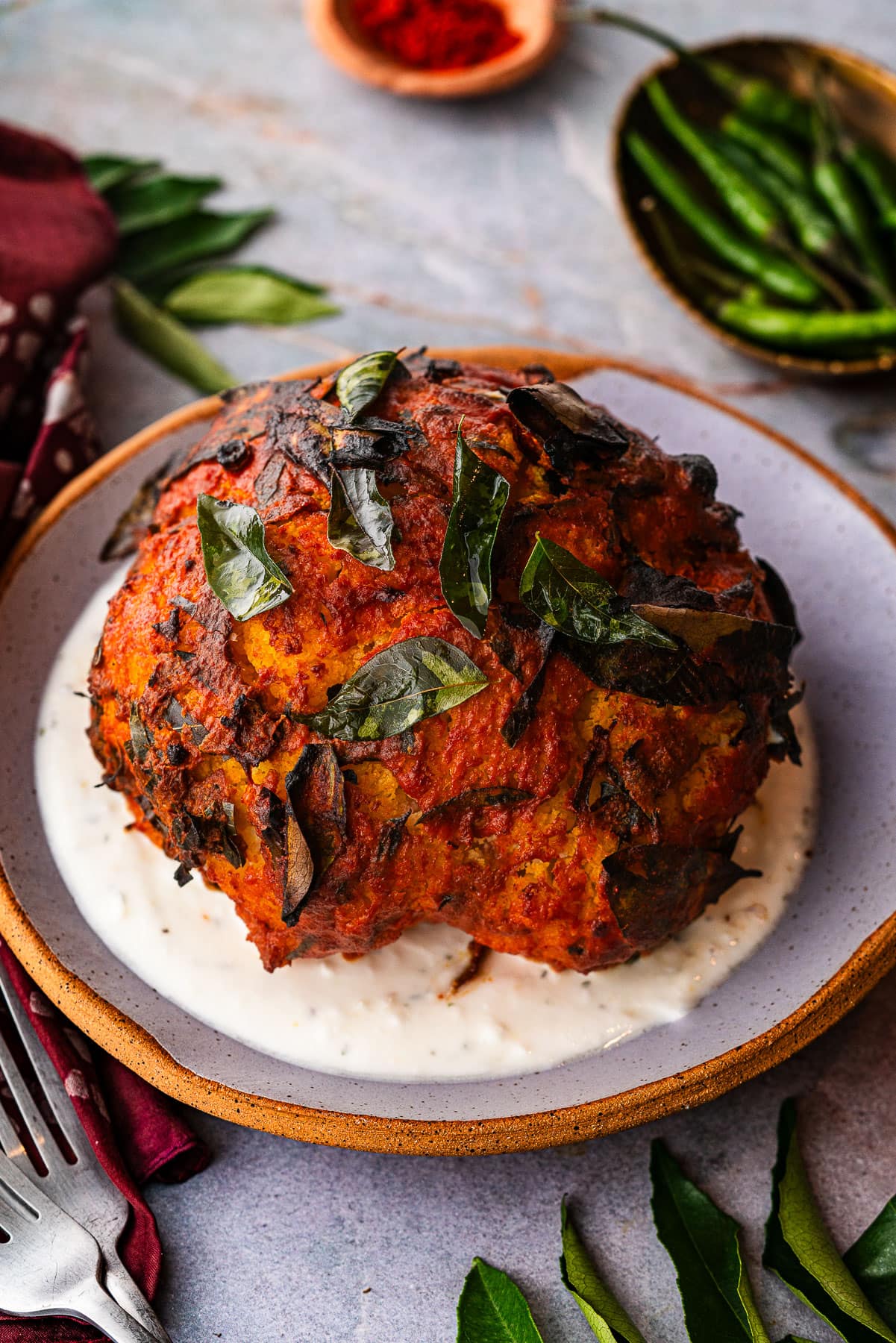
This is how they're used in:

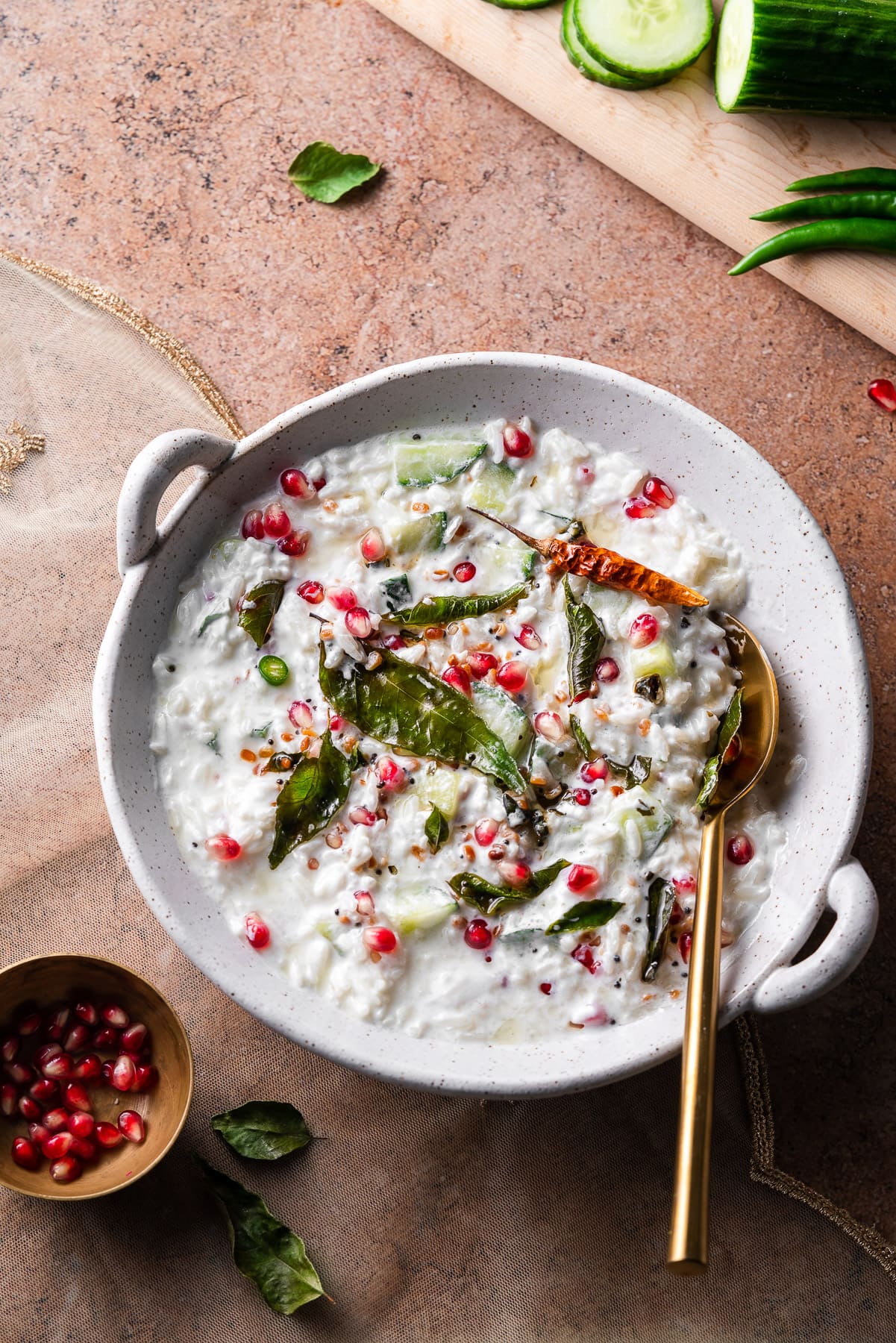
2. Add Whole in Dishes
Add directly into:
- Chicken curry
- Fish curry
- Chicken 65
- Indian-style vegetable stir fries
3. Curry Leaf Powder
In some homes, fresh curry leaves are sun dried and ground into a powder and use it in something like my Curry Leaf Ranch recipe. It's also mixed into a custom spice blend that can be added to curries.
How to Store Curry Leaves
I almost always have way more curry leaves than I intend on using in a recipe. They don't last forever, but if you store them properly you can extend their shelf life.
Don't leave them in the perforated plastic bag they come in and toss them in the fridge! To store them in the refrigerator:
- Remove any damaged or yellow leaves.
- Wrap them in a peper towel.
- Place them in an airtight container or ziploc bag to absorb excess moisture.
- Store them in the refrigerator for 1-2 weeks.
They should stay fresh, vibrant, and slightly firm.
Nutritional Notes
Curry leaves are often associated with traditional Ayurvedic wellness practices.
What we can safely say from Healthline:
- They contain antioxidants.
- They're rich in plant compounds.
- They've been used traditionally in digestive and wellness practices for centuries.
Can You Grow Curry Leaves at Home?
Yes - especially in warm climates that are tropical or subtropical like zone 9b and above. They are grown as small trees but can get huge if given the space. In Arizona, my mom and I both have curry leaf trees that thrive in the dappled shade of our lemon trees. In the spring it blooms beautiful small white, fragrant flowers that forms seeds which can be used to start new plants.
They need:
- Full sun
- Excellent drainage
- Protection from frost
- Light feeding during growing season
In cooler zones, grow it in a container and bring indoors during winter and keep it in a sunny, warm windowsill. It likely won't get taller than 2-3 feet unless up potted. I would recommend grabbing a plant from Etsy.
If you cook Indian food regularly, this is one of the smartest plants to own! No one off trips to the grocery store just for a few stems.
Dried curry leaves lose about 70-80% of their aroma. They won't give you the same depth.
If you can't find fresh, buy fresh and freeze them or store them in a zip bag with paper towel in the refrigerator.
No, the flavor is completely different.
Lindsey says
What a wonderful post!! 🤩 I recently went to a local plant nursery and walked by a curry leaf tree they had, and the smell was intoxicating! I have always wondered about the connection between curry leaves and curry powder, I'm so glad I came across your guide to explain the differences between fresh curry leaves and a curry powder spice blend! Now I might just have to go get my own little sapling...the trees are beautiful!