

Bright, tart, and deeply refreshing, Hibiscus Tea is one of those drinks that feels just as comforting warm as it does ice-cold on a hot day. Made from dried hibiscus petals (often called roselle), this vibrant ruby-red tea has a naturally tangy flavor that's somewhere between cranberry and pomegranate.
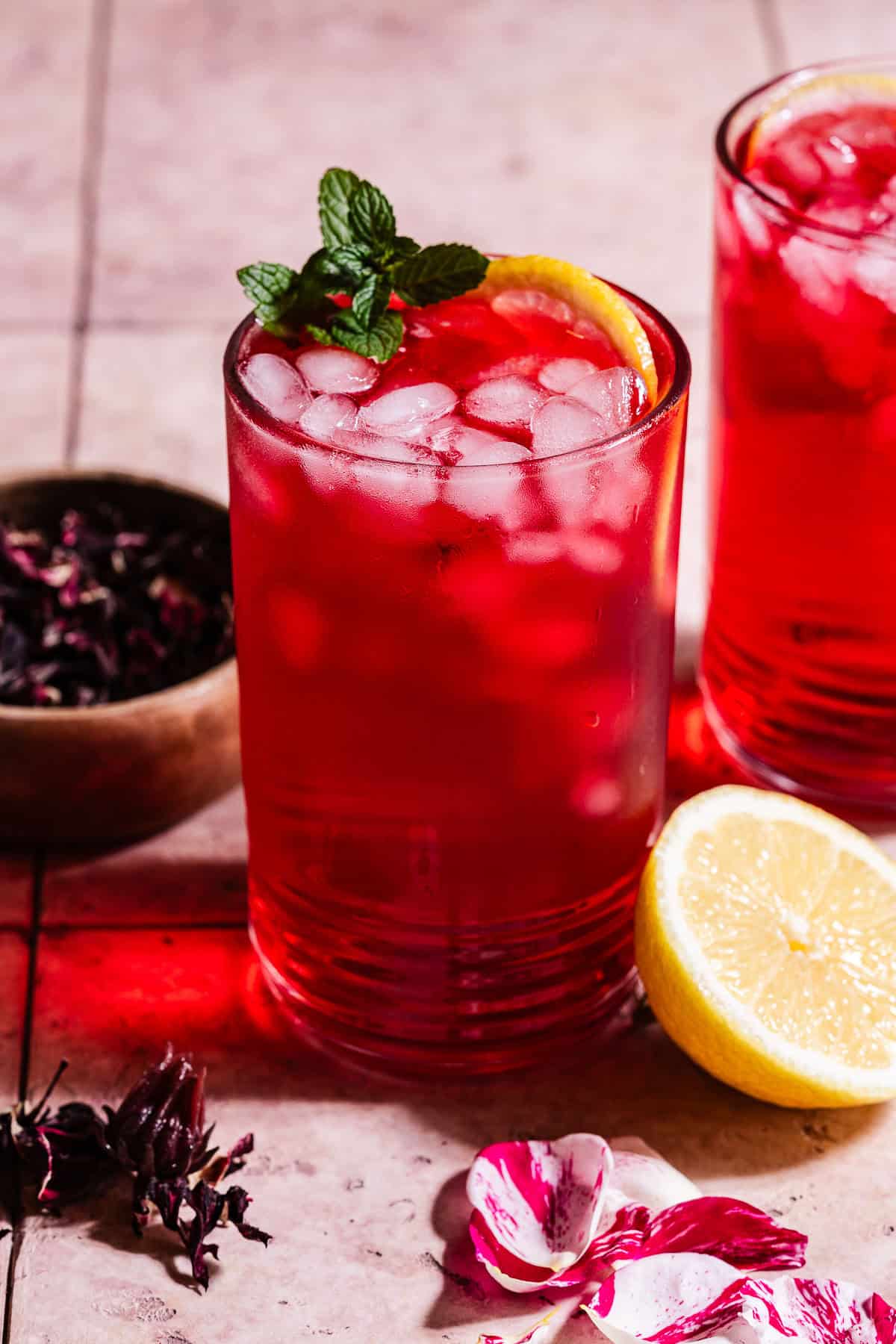
Hibiscus tea is an herbal tea made by steeping dried hibiscus flowers in hot water. Because it's naturally caffeine-free, it's perfect for sipping throughout the day or winding down in the evening. The flavor is bold and tart on its own, but it pairs wonderfully with citrus, honey, or lightly sweetened syrups.
You'll often find hibiscus tea enjoyed across the Caribbean, Mexico, parts of Africa, and South Asia - sometimes sweetened, sometimes spiced, and often served over ice. I know the best cup of iced hibiscus tea that I ever had was in Egypt, but you also won't find me without an agua de jamaica at a Mexican restaurant.
In many cultures, hibiscus tea is enjoyed year-round - sipped warm in the winter months and poured over ice when the weather turns warm. This recipe shows you how to make a simple hibiscus tea base that works beautifully both ways, so you can enjoy it however the season (or your mood) calls for it.
Jump to:
Why You'll love this Recipe
- Naturally caffeine-free
- Easy to serve hot or iced
- Beautiful deep red color
- Tart, refreshing, and customizable. Make it a hibiscus lemonade in the summer or a sorrel for Christmas!
- Can be made ahead and stored in the fridge
Ingredients - Notes and Substitutions
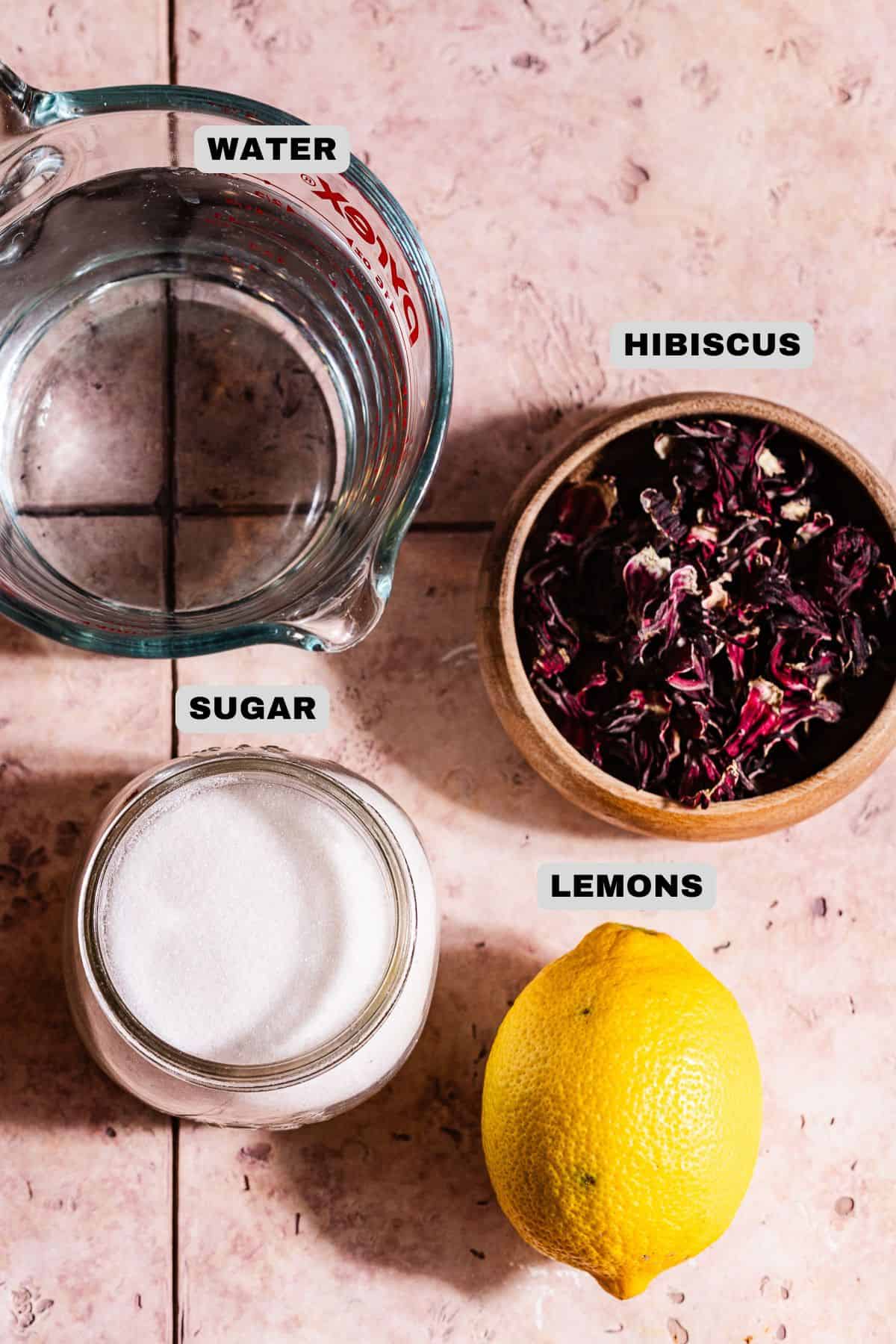
- Dried hibiscus petals - Also labeled as roselle or hibiscus flowers
- Sweetener - Use one of your choice like honey, sugar, or simple syrup
- Citrus - Lemon or orange slices pair beautifully with hibiscus, adding a layer of cozy flavor
Hibiscus Tea Isn't Made From the Big Red Flowers
One common misconception about hibiscus tea is that it's made from the large, showy hibiscus flowers you often see in gardens and landscaping. While those tropical hibiscus blooms are beautiful, they're not what's typically used to make hibiscus tea. Some varieties are technically edible, but they're not the traditional or reliable source used for tea and can vary widely in flavor and safety.
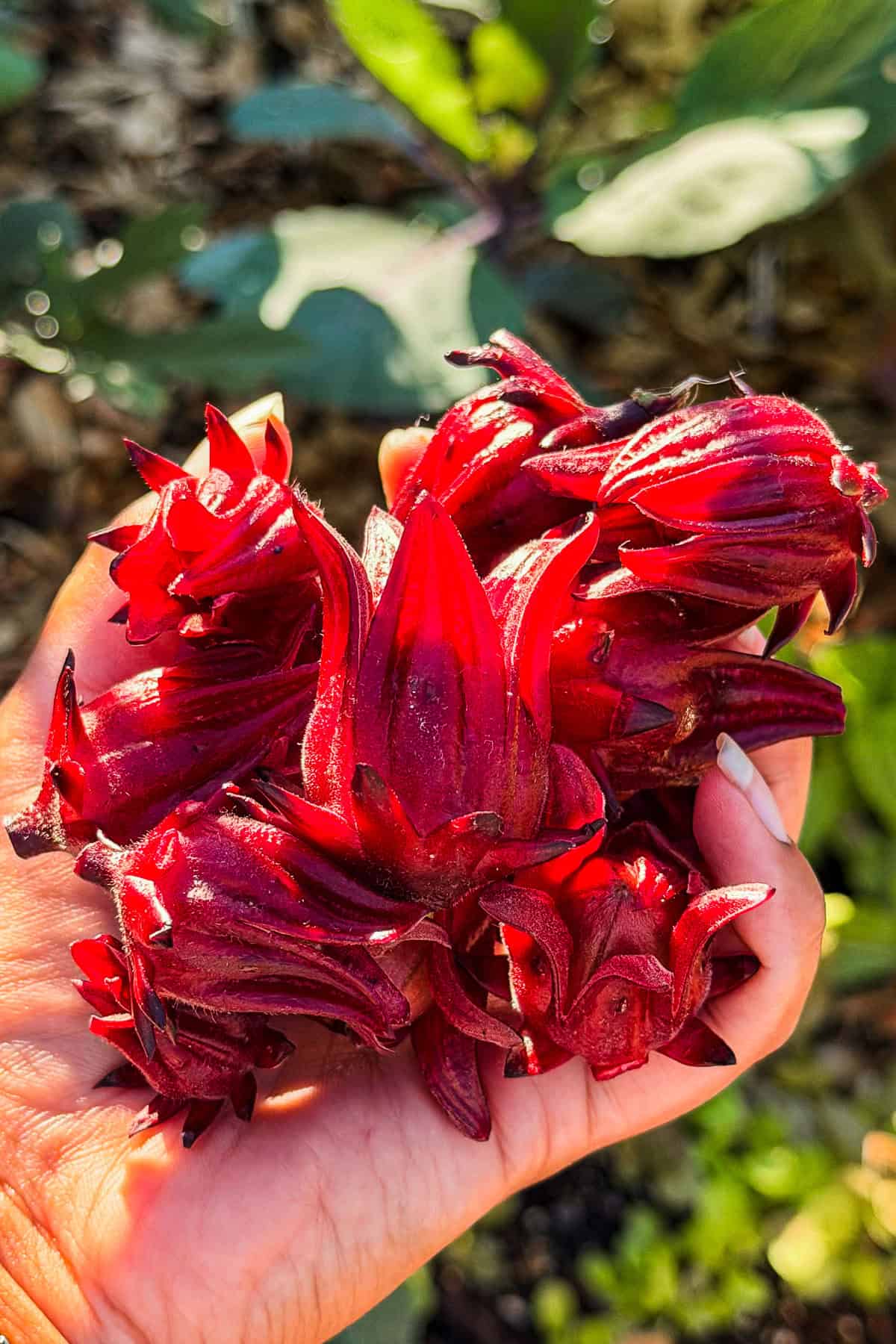
Hibiscus tea is traditionally made from hibiscus sabdariffa (often called roselle), a specific variety of hibiscus grown for its edible calyces - the fleshy, ruby-red part that forms after the flower blooms and falls away.
This is the variety used for tea, syrups, jams, and drinks around the world. The calyces have a naturally tart, cranberry-like flavor and are what give hibiscus tea its signature deep red color.
For home cooks, the easiest and safest option is to use dried hibiscus petals or calyces sold specifically for culinary use, often labeled as hibiscus, roselle, sorrel, or flor de jamaica.
How to Make Hibiscus Tea
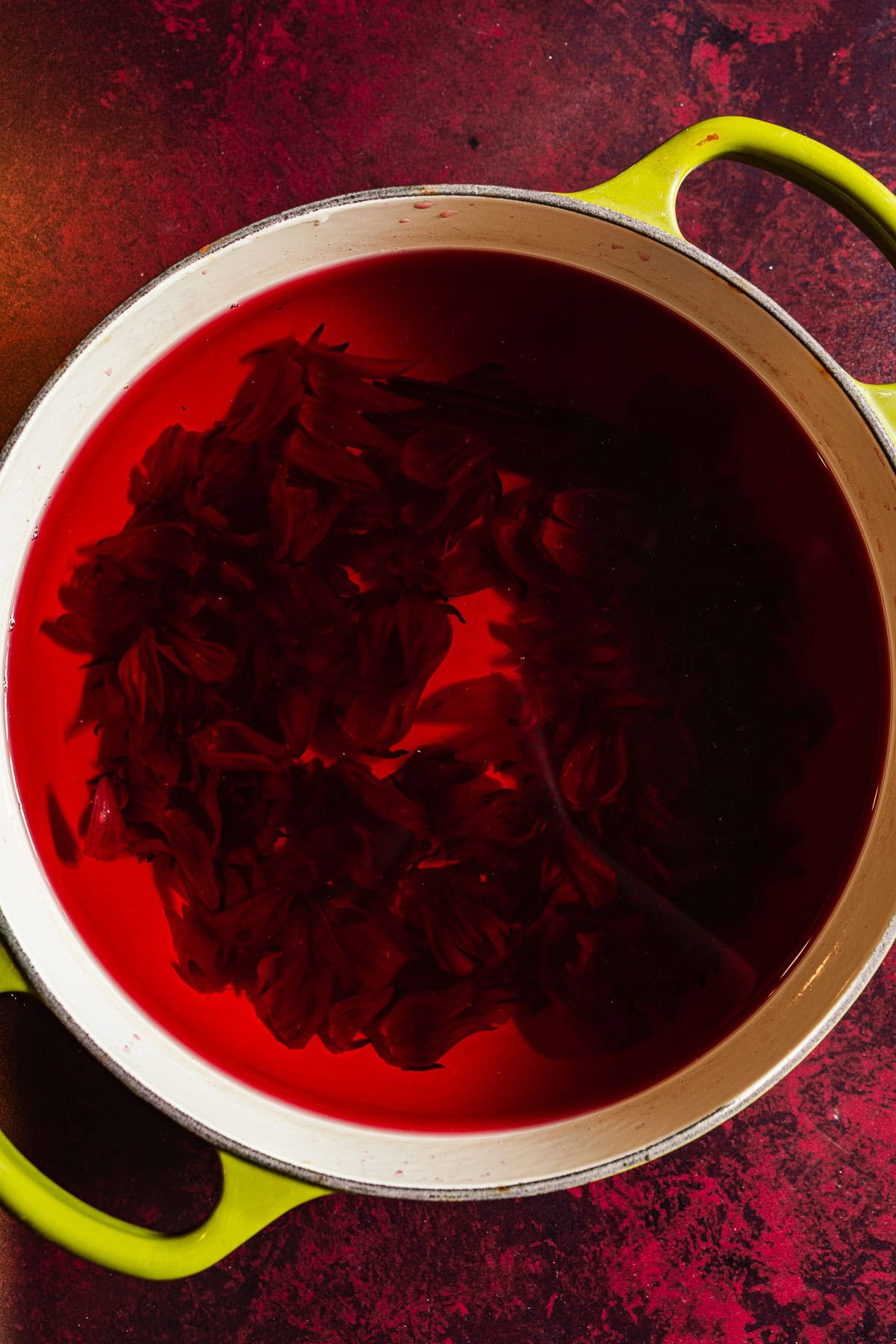
- Step 1: Bring water to a boil, then add the dried hibiscus petals. Reduce the heat and let the tea simmer gently on low for 2 minutes. Cover and steep for 15 minutes. Strain out the hibiscus petals. At this stage, you'll have a strong, concentrated hibiscus tea.
- While the tea is still warm, stir in your sweetener of choice to taste. Hibiscus is naturally tart, so even a small amount of sweetness helps balance the flavor.
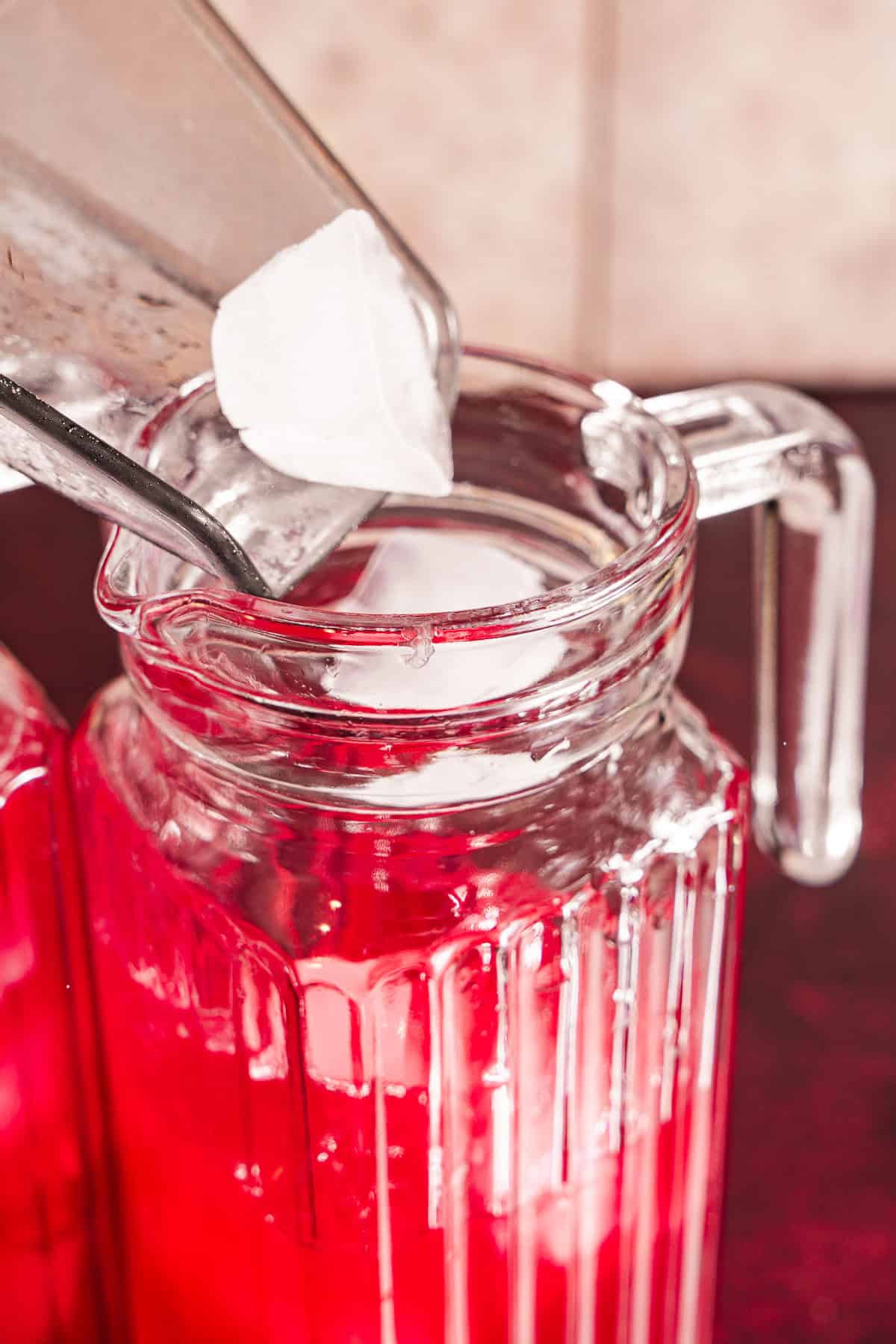
For Iced Hibiscus Tea - Let the brewed tea cool to room temperature, then refrigerate until chilled. Serve over ice and garnish with citrus slices if desired. This version is crisp, refreshing, and perfect for warm days.
For Warm Hibiscus Tea -
Serve the freshly brewed tea warm, just like a traditional herbal tea. This is especially comforting during cooler months and pairs beautifully with a touch of honey and a slice of orange.
Expert Tips and Tricks
- Make it citrusy: Add orange peel or lemon slices while steeping
- Lightly spiced: A cinnamon stick, cloves, ginger slices, or a few crushed cardamom pods add warmth
- Less tart: Dilute with extra water or ice
- Stronger flavor: Steep longer for a deeper, more intense tea
Storage Instructions
Store brewed hibiscus tea in an airtight container in the refrigerator for up to 4-5 days. Shake or stir before serving, especially if sweetened.
FAQs
Hibiscus tea is widely enjoyed as a caffeine-free herbal tea made from dried roselle hibiscus petals. Many people appreciate it for its bold flavor, refreshing taste, and role in traditional food cultures. Individual preferences and dietary needs vary.
No - hibiscus tea is naturally caffeine-free, which makes it a popular choice for evening sipping or for those avoiding caffeine.
Hibiscus tea is commonly enjoyed regularly in many cuisines. If you have specific dietary concerns, it's always best to enjoy it in moderation and consult a professional if needed.
Both! Hibiscus tea can be served warm like a traditional herbal tea or chilled over ice for a refreshing drink. The flavor remains vibrant either way.
Hibiscus tea has a tart, fruity flavor often compared to cranberry or pomegranate. Many people prefer it lightly sweetened or paired with citrus.

More Tea Recipes to try

Recipe
Want to Save This Recipe?
Thinking about making this recipe? Enter your email and I'll send it straight to your inbox to save for later. Plus, get new recipe inspiration from me every week!
By submitting this form, you consent to receive emails from Masala and Chai.

Iced Hibiscus Tea
Equipment
Ingredients
- 4 cups water
- ½ cup dried hibiscus petals
- 4 tablespoons sweetener, to taste (sugar, honey, or simple syrup)
- Citrus slices, for serving (optional)
Instructions
- Bring the water to a boil in a small saucepan.
- Add the dried hibiscus petals, reduce heat, and simmer on low for 2 minutes. Remove from heat, cover with a lid, and steep for 15 until the tea turns a deep ruby red.
- Strain out the petals.
- While warm, stir in sweetener to taste, if using. Or, allow it to come to room temperature to serve over ice. Garnish with a sprig of mint and a slice of citrus.
Notes
- Store brewed hibiscus tea in an airtight container in the refrigerator for up to 4-5 days. Shake or stir before serving, especially if sweetened.
- Hibiscus tea is naturally tart; adjust sweetness to balance the flavor.
- For a lighter tea, dilute with additional water or ice.
- Add orange peel, lemon slices, or a cinnamon stick while simmering for variation.
Leave a Reply