


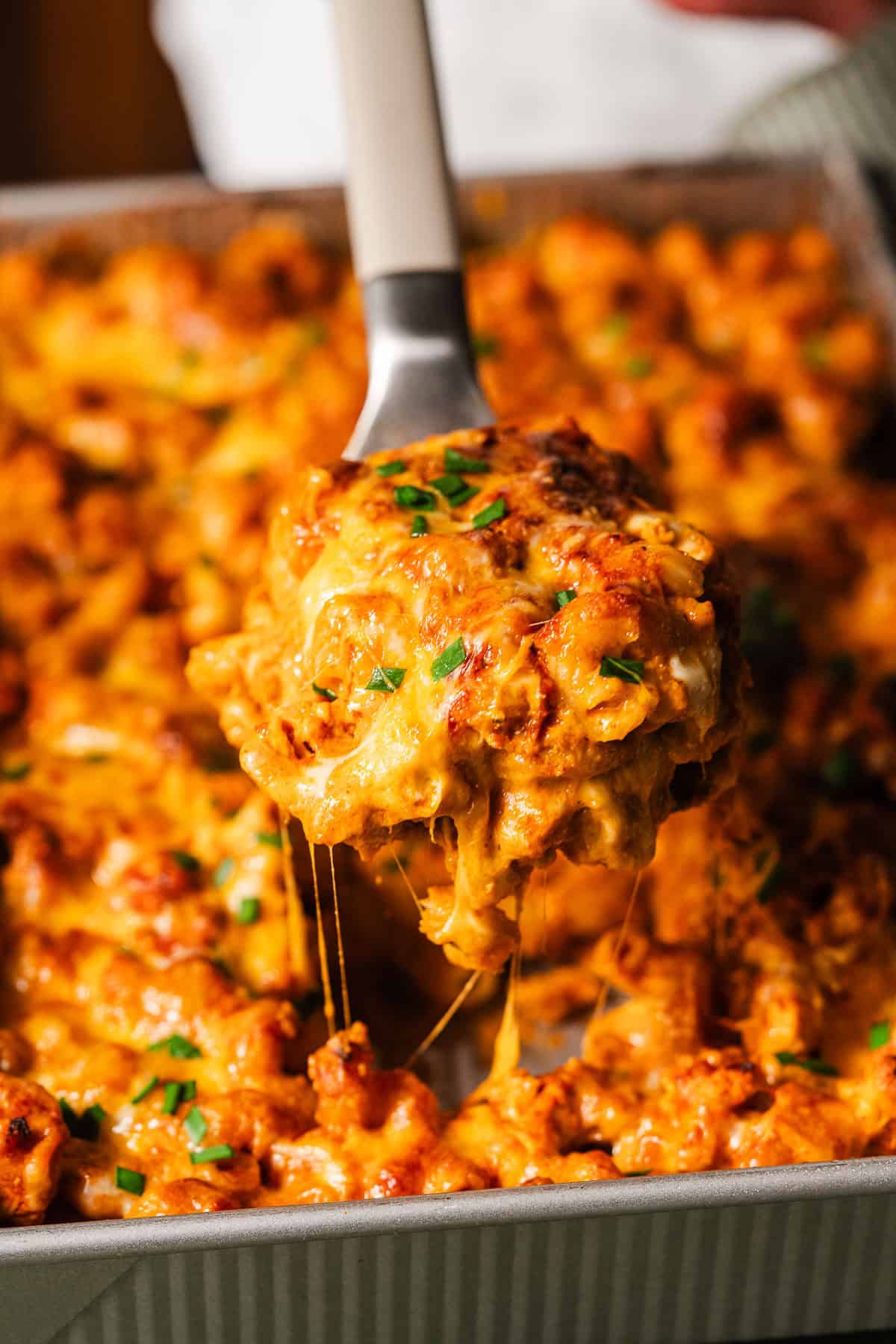
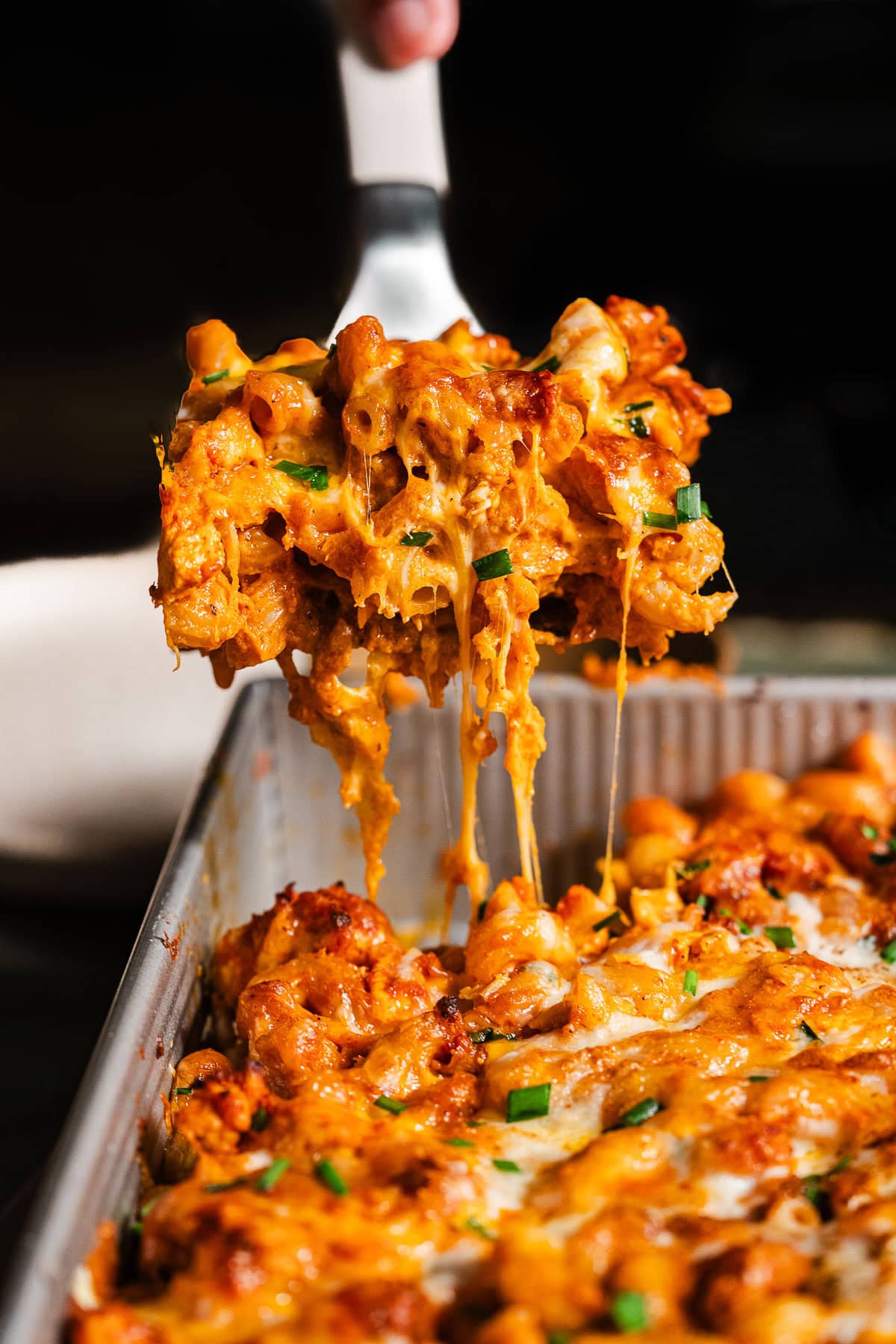
If you love butter chicken and a really good baked mac and cheese, this recipe brings the two together for the ultimate comfort food. This Butter Chicken Mac and Cheese combines a tender, yogurt-marinated tandoori chicken, a rich and concentrated makhani sauce flavor bomb, and a creamy three cheese roux-based sauce baked until bubbly with a golden, cheesy crust.
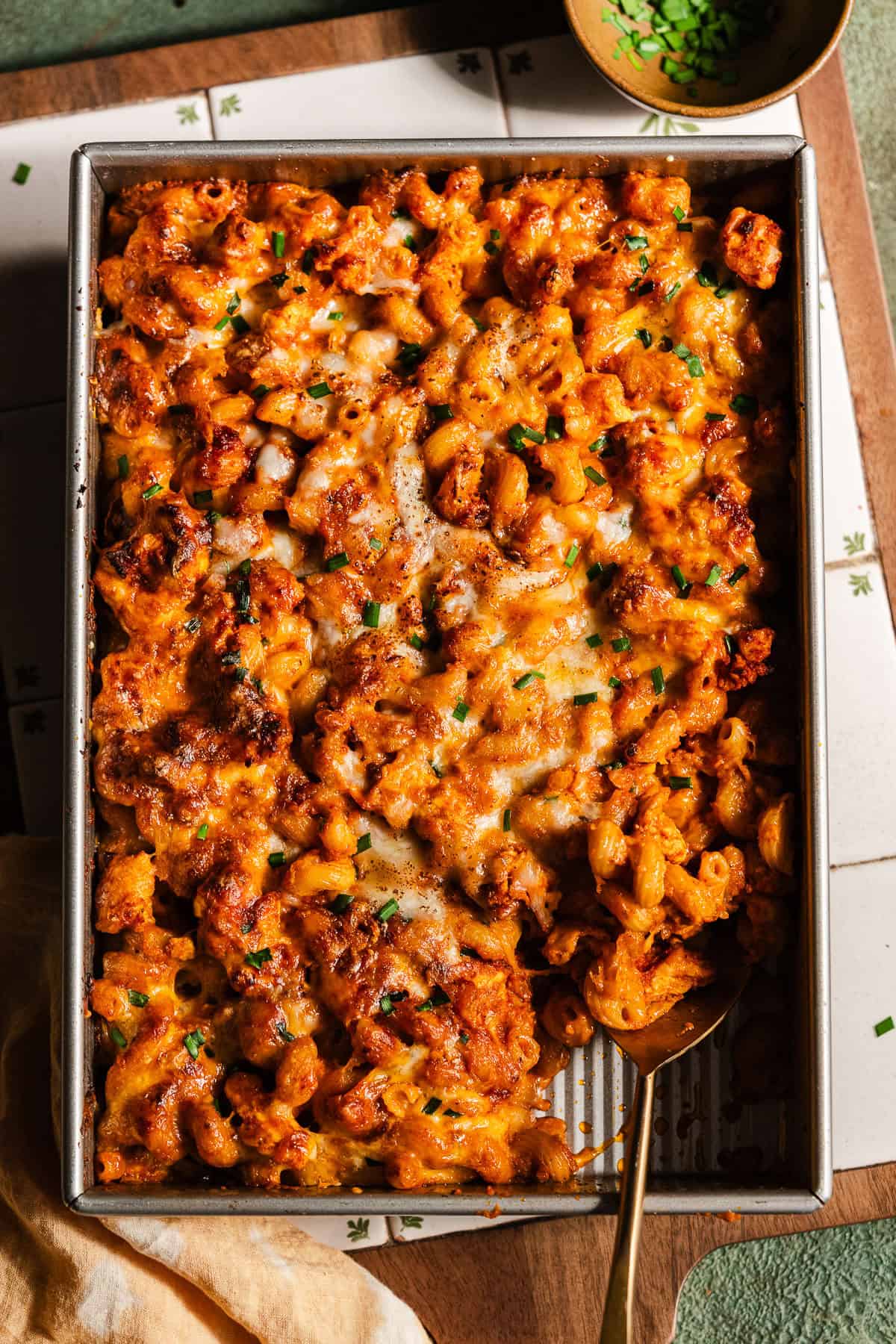
After testing this recipe several times over several years (there's only so many vats of rich mac and cheese you can eat every so often), we finally nailed it and are excited to share a Butter Chicken Mac and Cheese where the flavors of butter chicken don't take a backseat to the cheese.
The key to this recipe was building the butter chicken flavor separately and concentrating before incorporating it into the roux. Before, I attempted to fold in a few servings of butter chicken or develop the flavors directly in the roux and it never felt good enough. This gives the cheese sauce all the flavor of butter chicken without making it a loose sauce.
The chicken is also marinated and cooked separately, allowing it to get some browning before layering it into the mac and cheese. All these decisions arrived at truly the perfect dish that's a stunner for dinner or with other Thanksgiving side dishes.
Jump to:
Why You'll love this Recipe
- The cheese sauce is designed to stay creamy. It uses a traditional roux-based cheese sauce with evaporated milk and heavy cream to create a smooth consistency. You'll also find plenty of tips for preventing grainy or oily sauce, especially if you want to reheat it.
- No dry, brick-like mac and cheese. The sauce is slightly looser before baking to account for the pasta to absorb moisture in the oven. You'll get a creamy, scoopable mac and cheese rather than a dense casserole-like dish that dries out. There's a time and place for the egg method that's more custardy, and it's not with the butter chicken vibes we want!
- Every component is prepared with purpose. They're cooked separately before assembly. Yes, it's a bit more work. But the chicken needs the browned edges and the makhani sauce concentrates its flavor so it doesn't get lost in all the dairy.
- A balanced cheese blend. The great debate of which cheese to use! Cream cheese, Velveeta, American cheese, gouda, etc etc. I purposefully chose these 3 to compliment butter chicken. Mozzarella for stretch (but not so much that it's oily), Colby Jack for creaminess, and cheddar for a sharp cheese flavor.
I'll also give you plenty of troubleshooting tips. Baked mac and cheese is a stellar example of how cooking science matters. I'll explain not just what to do, but why technique matters.
Ingredients - Notes and Substitutions
Butter Chicken, also known as murgh makhani, is one of my specialties and a top recipe on Masala and Chai.
If, for some reason, the spices aren't accessible, then I'd highly recommend the MDH Butter Chicken Masala, which can be found online or at the Indian grocery. Use a quarter of the box for the marinade, and another quarter for the makhani sauce. Personally, I adjust the MDH masala with an additional 1 teaspoon garam masala, ⅛ teaspoon ground cloves, ½ teaspoon cumin, ½ teaspoon freshly ground green cardamom, and ½ teaspoon coriander to the makhani sauce.
Tandoori Chicken
We tasted this mac and cheese without the chicken and it is JUST AS DELICIOUS vegetarian!!! Feel free to omit the chicken!
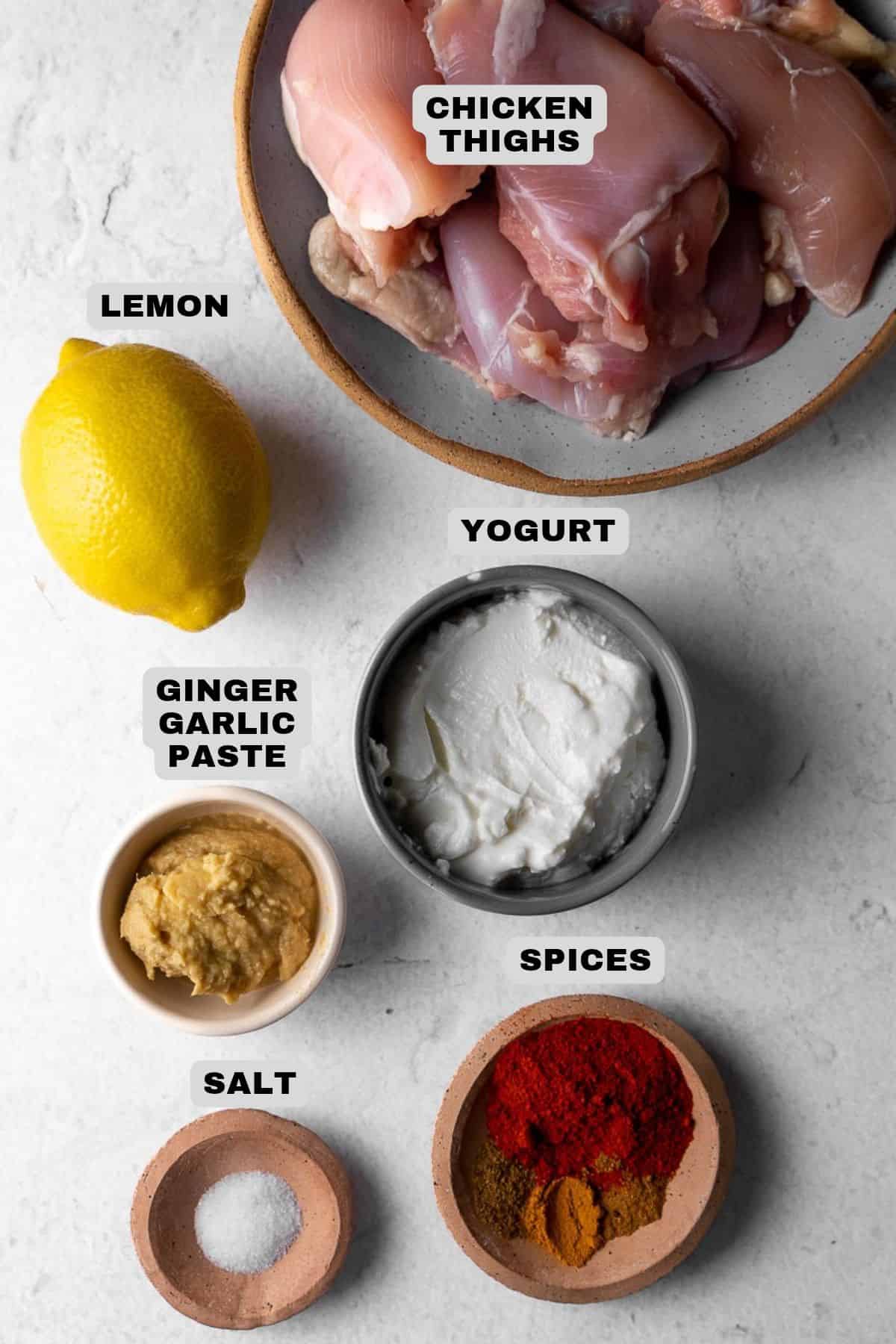
- Chicken thighs: I recommend boneless, skinless chicken thighs because they stay juicy during cooking and develop more flavor than chicken breast, which tend to dry out especially if you want to reheat the dish. Cut them into approximately 1-inch pieces so they cook quickly and evenly.
- Plain whole milk yogurt: The yogurt tenderizes the chicken and helps the spices adhere. Whole milk yogurt or dahi also gives the marinade a thicker consistency. Plain Greek yogurt also works.
- Ginger garlic paste: A staple in Indian cooking that adds aromatic flavor to the marinade. Substitute with a 50/50 blend of grated ginger and garlic, or powder works, too.
- Lemon juice: Adds acidity and balances the richness of the yogurt.
- Neutral oil: Helps distribute the spices and promotes browning. Can be omitted.
- Kashmiri chili powder: Adds a beautiful red color and mild heat without making the chicken overwhelmingly spicy. It is different from cayenne pepper, so avoid substituting it in equal quantities.
Makhani Sauce Bomb
This is the concentrated butter chicken sauce that gives the mac and cheese its signature flavor. It is made separately and reduced until thick, allowing you to incorporate the flavor into the cheese sauce without getting lost in the heaviness of the dairy.
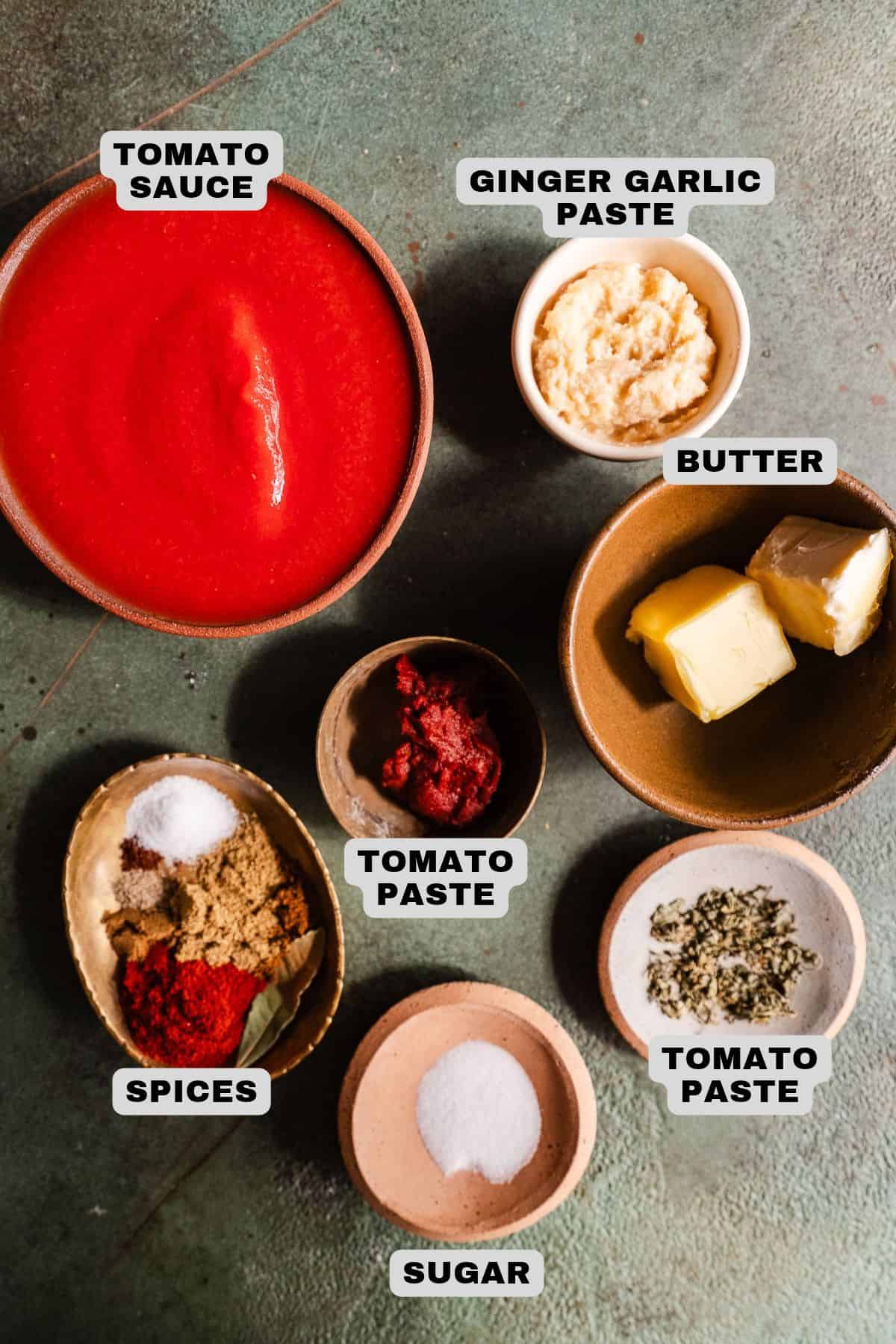
- Unsalted butter: Adds richness and a must for butter chicken. Stirring in a final tablespoon of butter gives the sauce a glossy rich finish.
- Bay leaf: Adds a subtle aromatic flavor while the sauce simmers. Remove it before incorporating the sauce into the mac and cheese.
- Ginger garlic paste: A staple in Indian cooking that adds aromatic flavor to the marinade. Substitute with a 50/50 blend of grated ginger and garlic, or powder works, too.
- Kashmiri chili powder: Provides the signature red-orange color and mild heat.
- Ground green cardamom: Adds a subtle floral, aromatic quality that is especially nice in makhani sauce.
- Onion powder: My original butter chicken recipe requires browning onion, but we use onion powder here so that we don't need to blend the sauce and make yet another dish dirty.
- Ground cloves: A tiny pinch adds warmth. Be careful not to overdo it because cloves can easily overpower the other spices.
- Tomato paste: Deepens the tomato flavor and adds concentrated umami.
- Tomato puree (passata): Creates the base of the makhani sauce. Passata is smooth and does not contain the chunks or seeds you might find in some canned tomatoes.
If using canned crushed tomatoes or fresh tomatoes, blend them until smooth before adding them to the sauce. - Sugar: Helps balance the acidity of the tomatoes. Adjust according to the sweetness of your tomato puree.
- Kasuri methi: Dried fenugreek leaves are essential for the characteristic flavor of butter chicken. Crush them between your palms before adding them to release their aroma. If you cannot find it, omit it.
Mac and Cheese
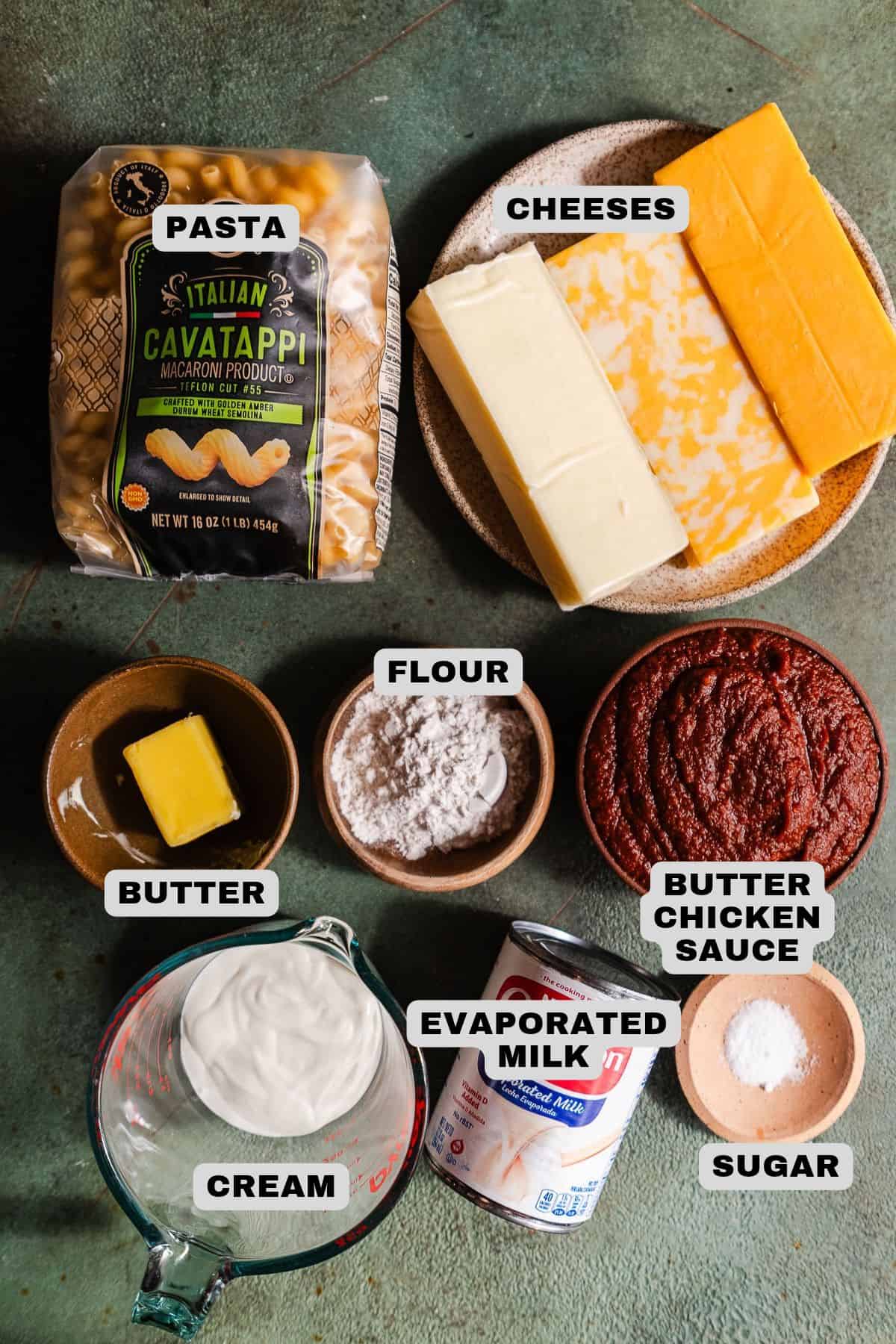
- Pasta: Cavatappi seems to be the preferred shape for mac and cheese because its corkscrew shape and hollow center hold plenty of cheese sauce. A classic elbow macaroni is always a good option, as well as shells.
- Low-moisture mozzarella: Provides the stretchy, gooey cheese pull. Use low-moisture mozzarella rather than fresh mozzarella, which contains too much moisture for this recipe.
- Colby Jack cheese: Melts beautifully and provides a mild, creamy flavor. Subsititute with Monterey Jack.
- Medium cheddar cheese: Adds the familiar sharp, savory cheese flavor without overpowering the makhani spices. Substitute with mild cheddar or gouda.
- Butter Chicken Sauce Bomb: From above, we create a concentrated butter chicken sauce and get it nice and thick to mix in the roux. Another option is to grab the Gymkhana Butter Masala simmer sauce.
- Although I'm not a big fan of simmer sauces, it does help cut down on the labor and dishes of this recipe.
- Unsalted butter: Used to make the roux.
- All-purpose flour: The starches thickens and stabilizes the cheese sauce.
- Evaporated milk: Adds creaminess and concentrated milk flavor and proteins for stabilization. Make sure you use evaporated milk, not sweetened condensed milk.
- Heavy cream: Adds richness and helps create a smooth, creamy cheese sauce.
- Kosher salt: Adjust to taste, keeping in mind that the cheese already contributes salt.
- Chives: An optional fresh garnish that adds a little color and mild onion flavor.
How to make Baked Butter Chicken Mac and Cheese
The marinated chicken and makhani sauce can be prepared 2-3 days in advance. This makes it easier to break up preparation and assemble everything when you're ready to cook!

- Step 1: Marinate bite sized pieces of chicken thighs for 30 minutes, up to 24 hours.
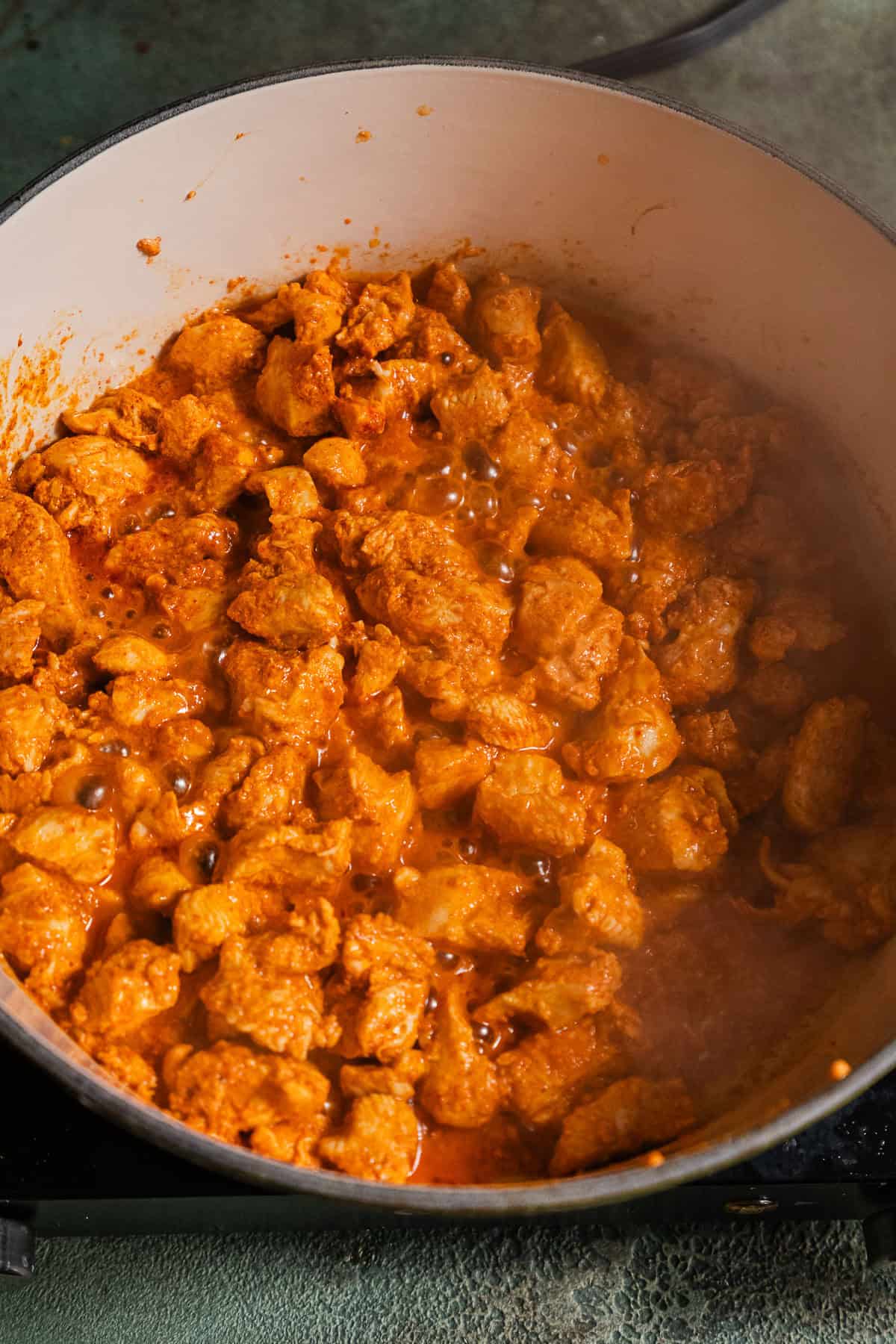
- Step 2: Cook on high heat in a cast iron until browned on both sides, with an internal temp of 165F. Set aside.
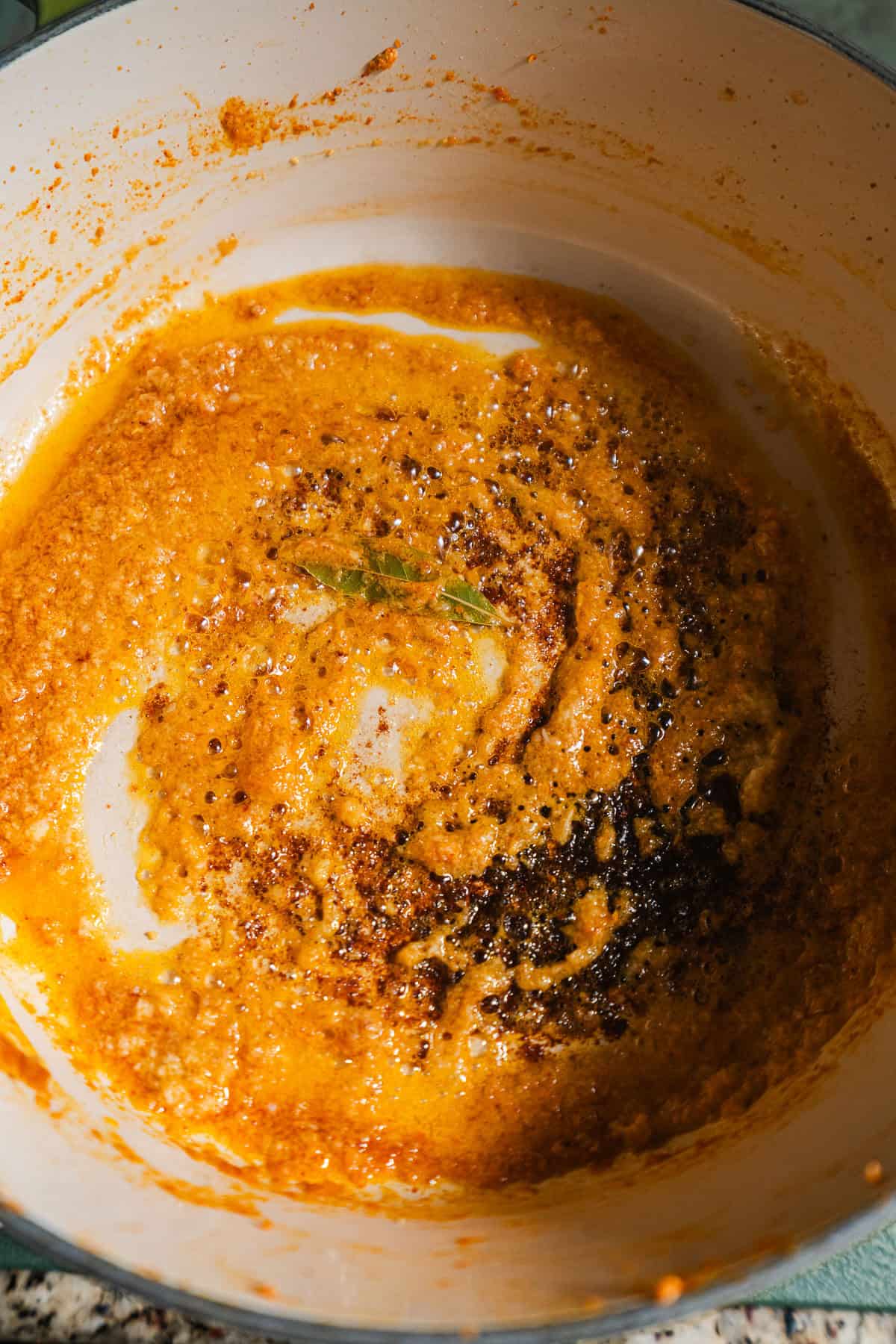
- Step 3: On low to medium heat, melt butter and sauté ginger garlic paste and a bay leaf.
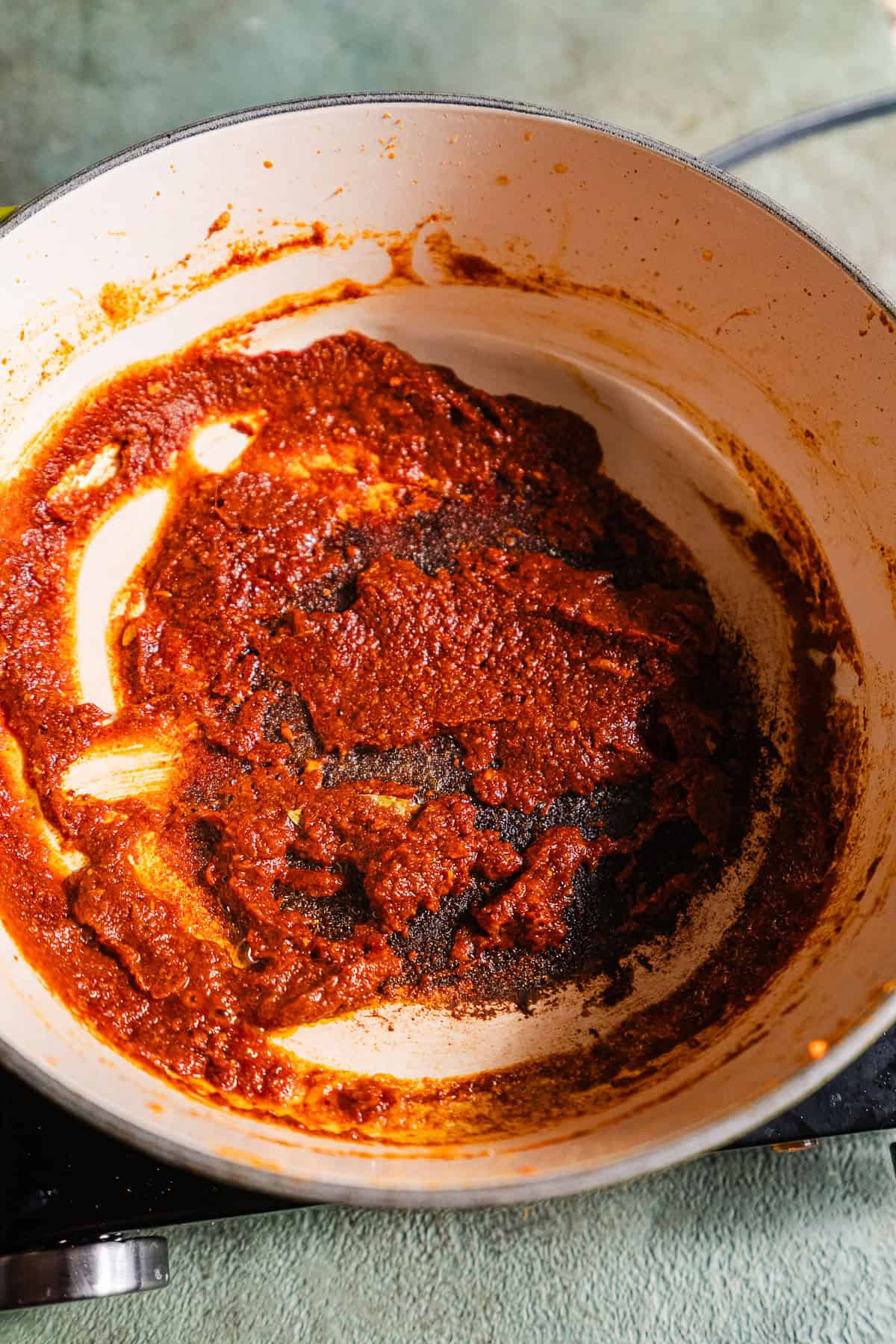
- Step 4: Add the tomato paste and cook until darkened in color. Add a splash of water if it starts to burn.
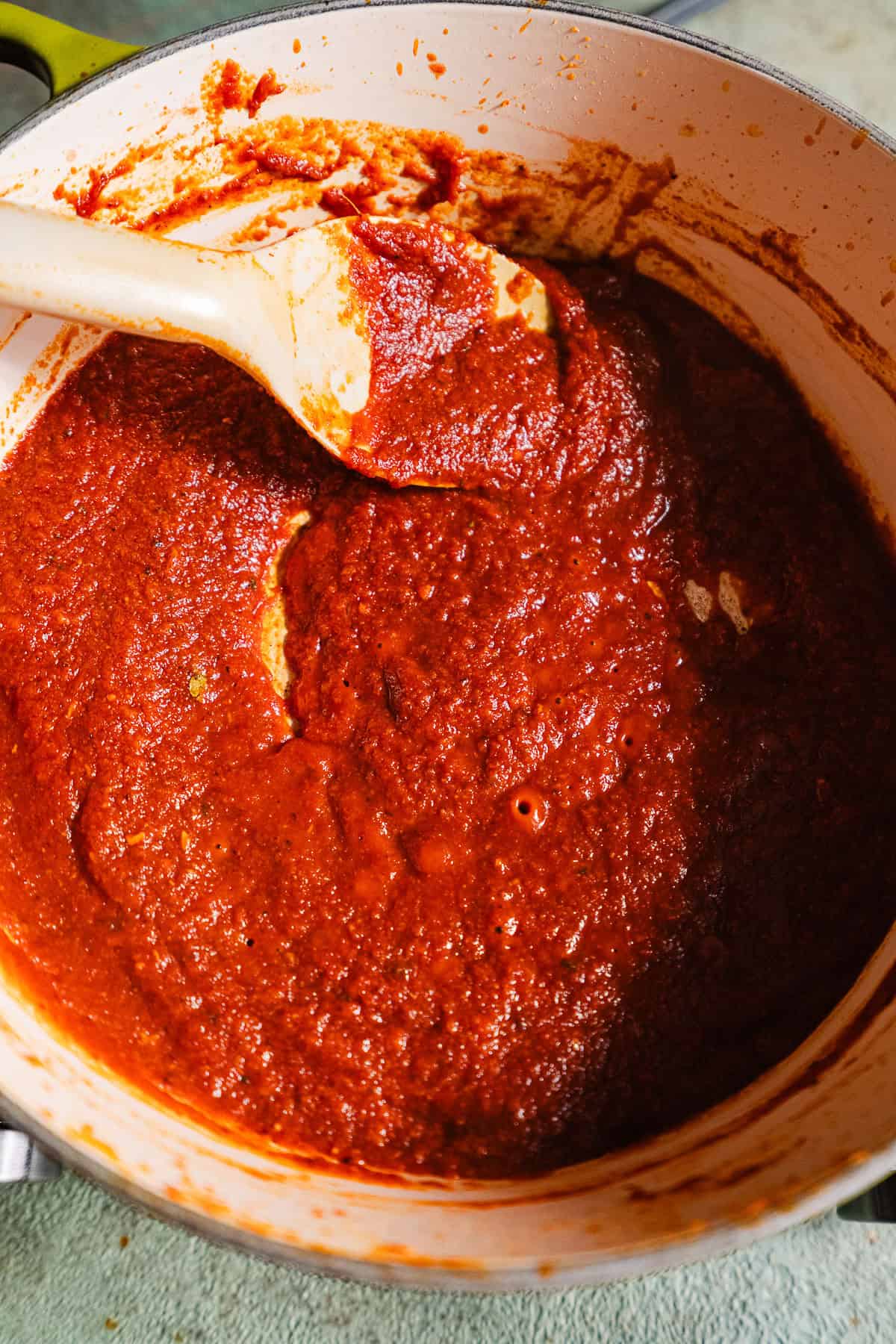
- Step 5: Stir in the spices, then the tomato puree and salt. Simmer until thick, about 15 minutes. Remove bay leaf. Add sugar, kasuri methi, and finish with 1 tablespoon of butter. Yields 1 cup of sauce.
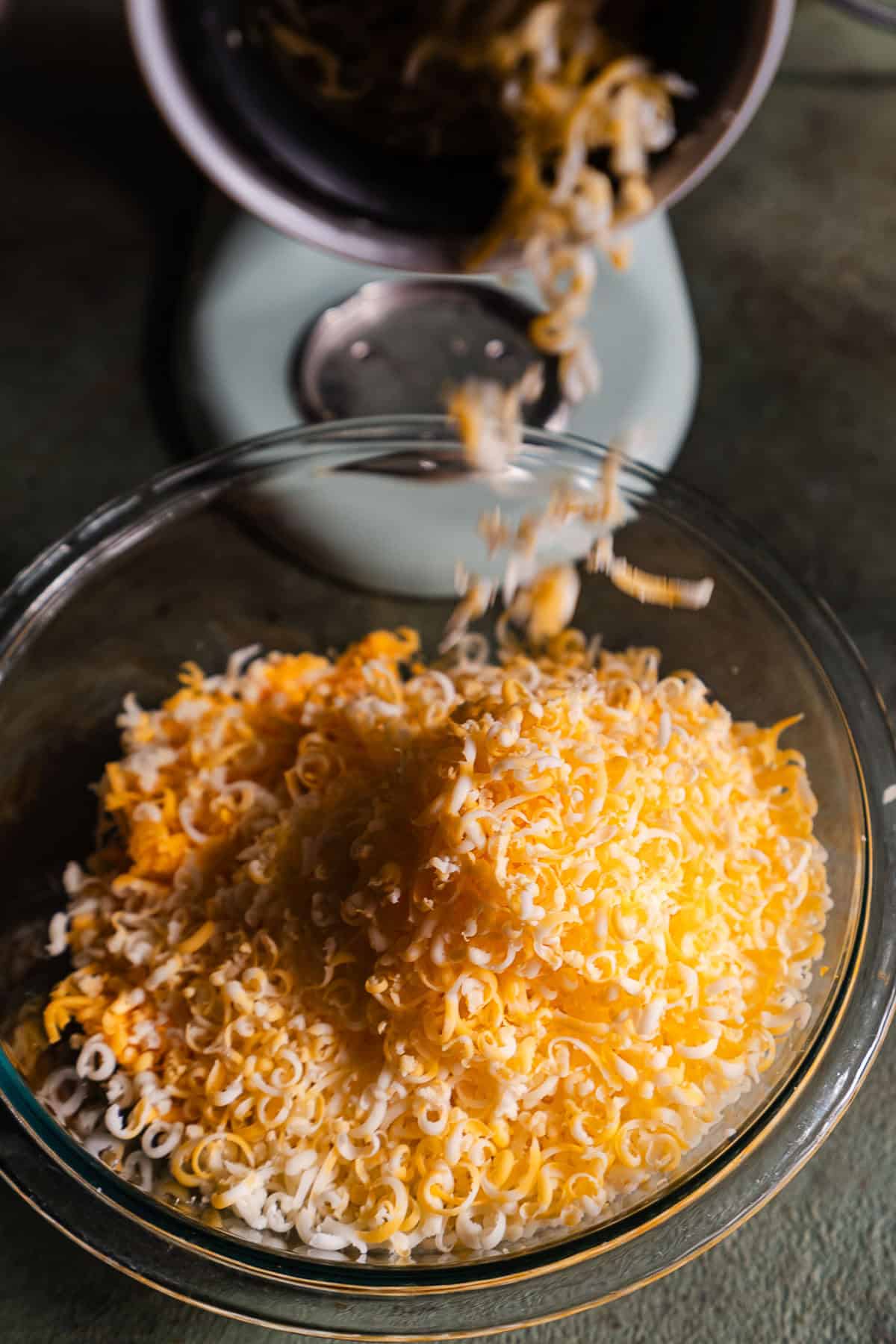
- Step 6: Grate the blocks of cheese into one bowl. Divide in half (half for cheese sauce, half for assembly).
Bring the a pot of salted water to a boil and cook your pasta of choice according to boxed instructions, subtracting 1 minute shy of al dente. Drain and set aside.
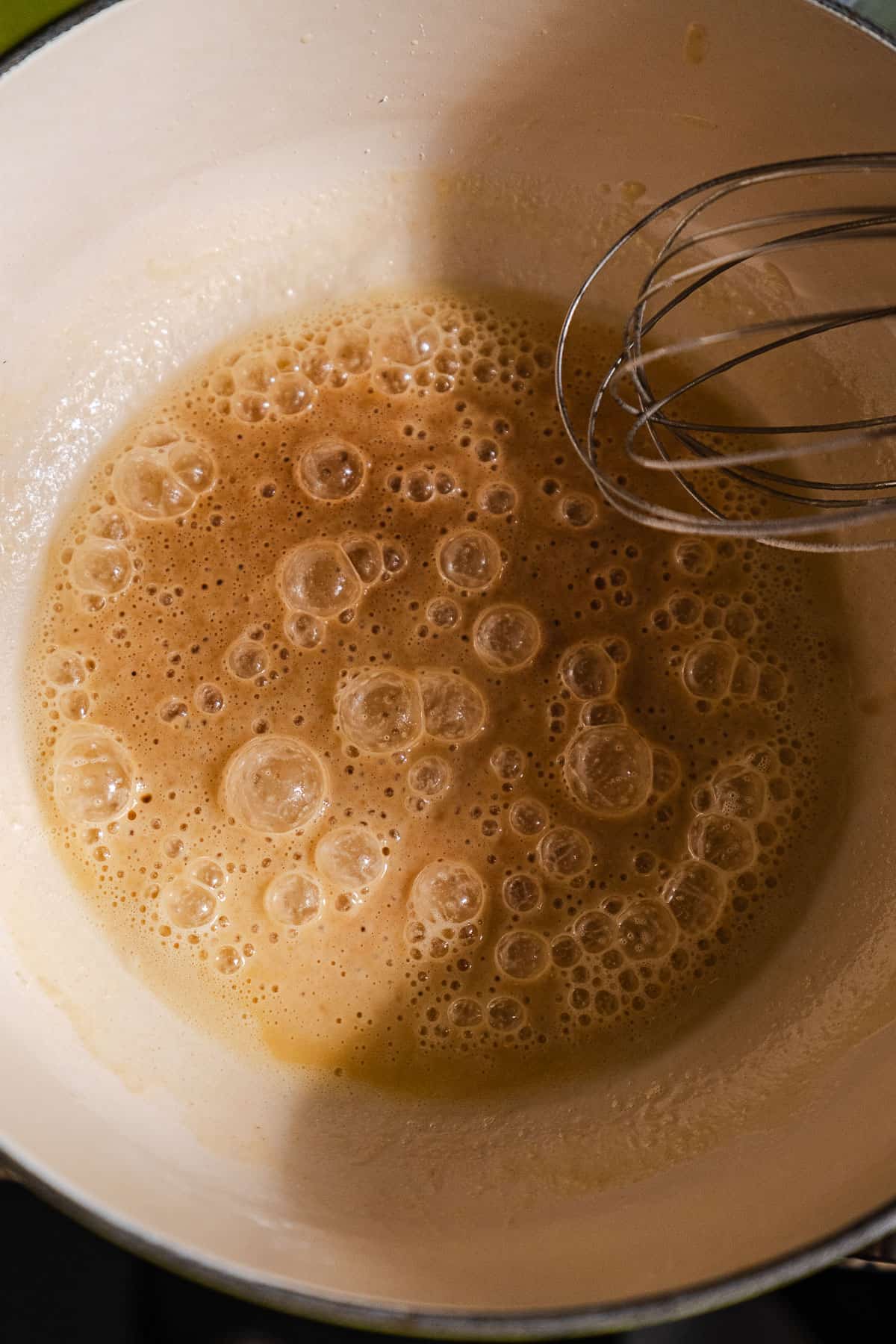
- Step 7: Melt butter over low to medium heat. Add the flour and whisk continuously to create a roux, about 3 minutes and a shade or two darker.
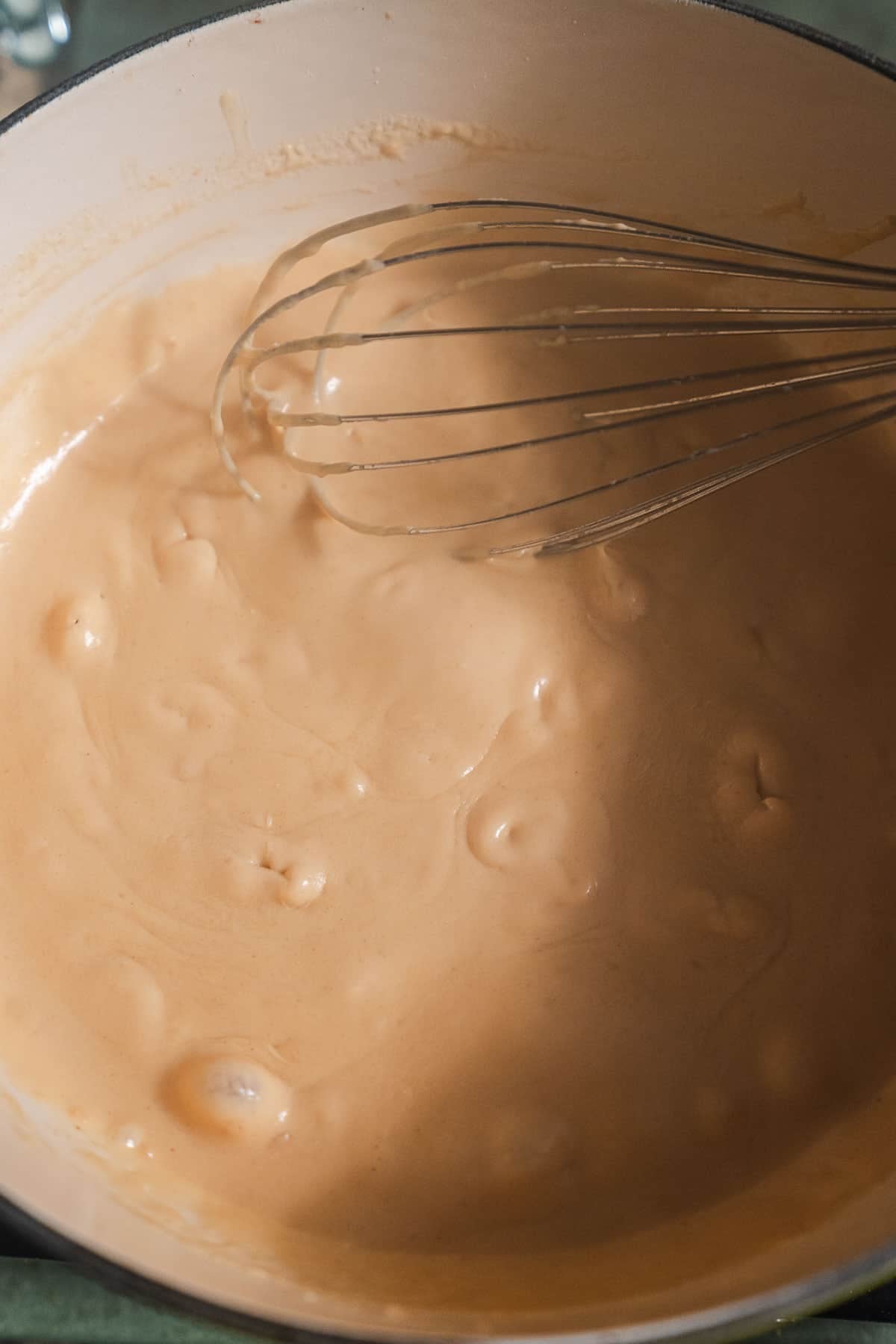
- Step 8: Once the roux is ready, slowly pour in the evaporated milk, whisking constantly until smooth and thick.
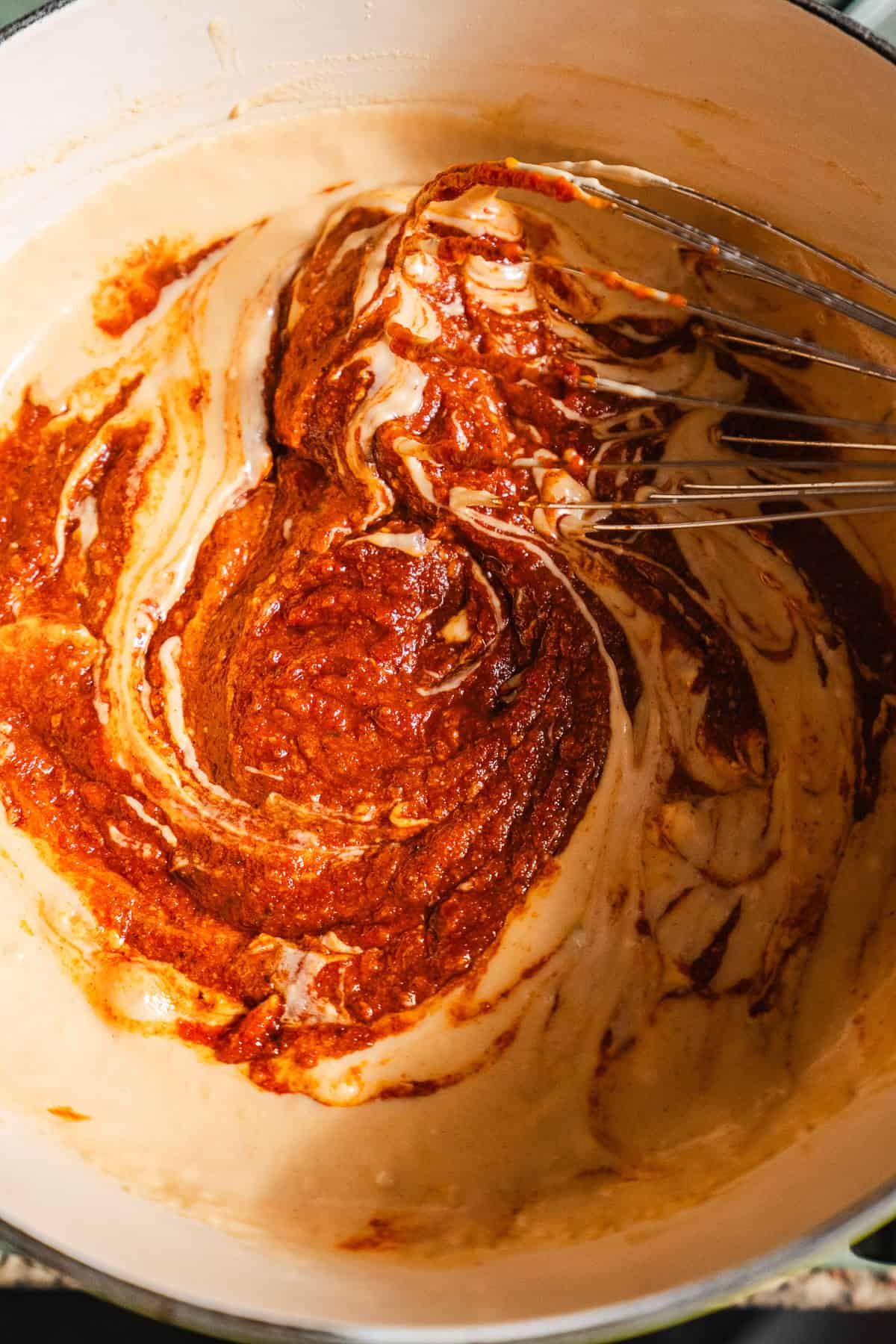
- Step 9: Add 1 cup of the makhani sauce into the bechamel and whisk until evenly incorporated. Then, add the heavy cream and whisk until smooth. Taste and adjust.
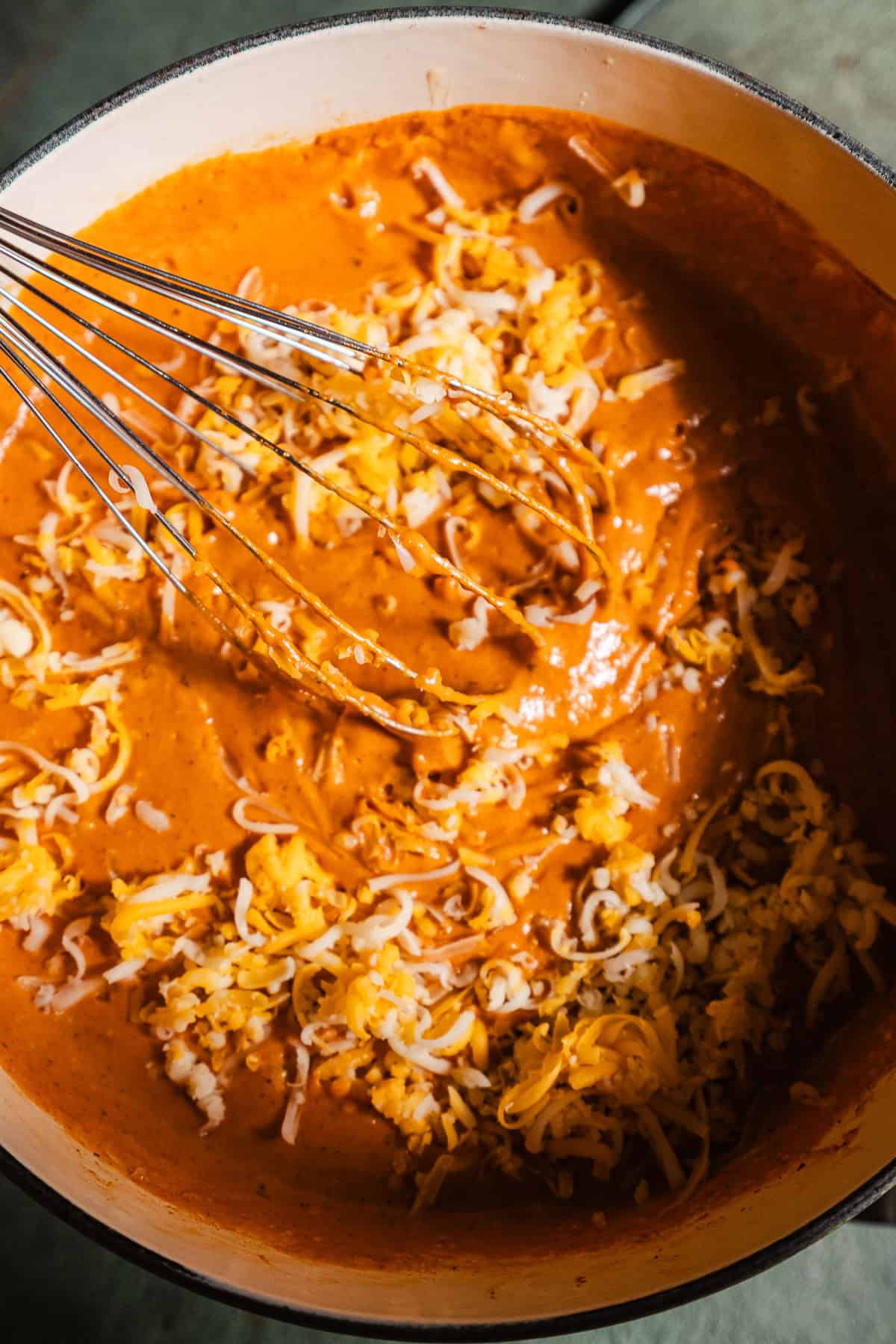
- Step 10: Turn the heat to low or remove the pot from heat. Gradually add in half of the shredded cheese, only adding in another handful when the previous has fully melted.
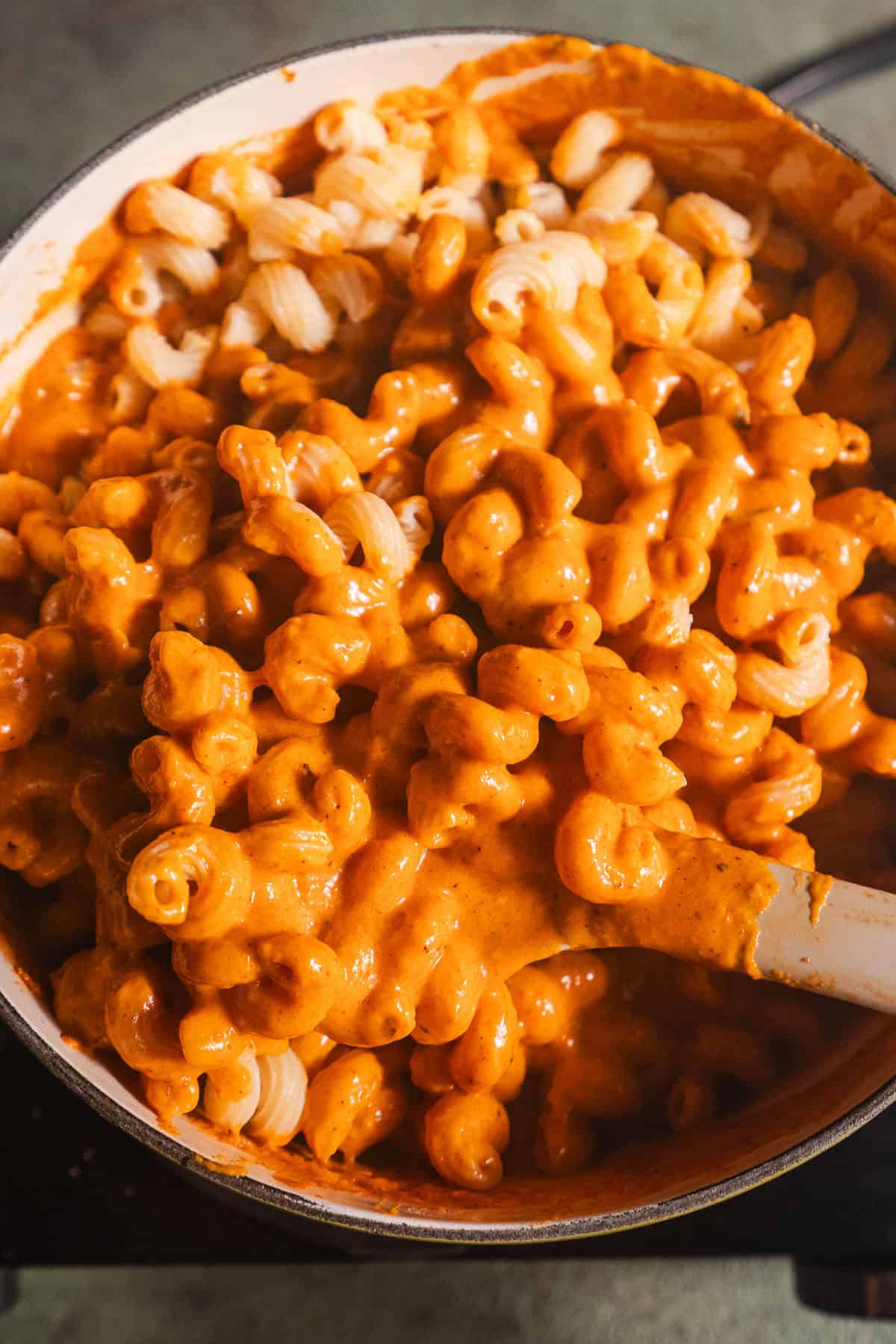
- Step 11: Add the cooked pasta and toss to coat.
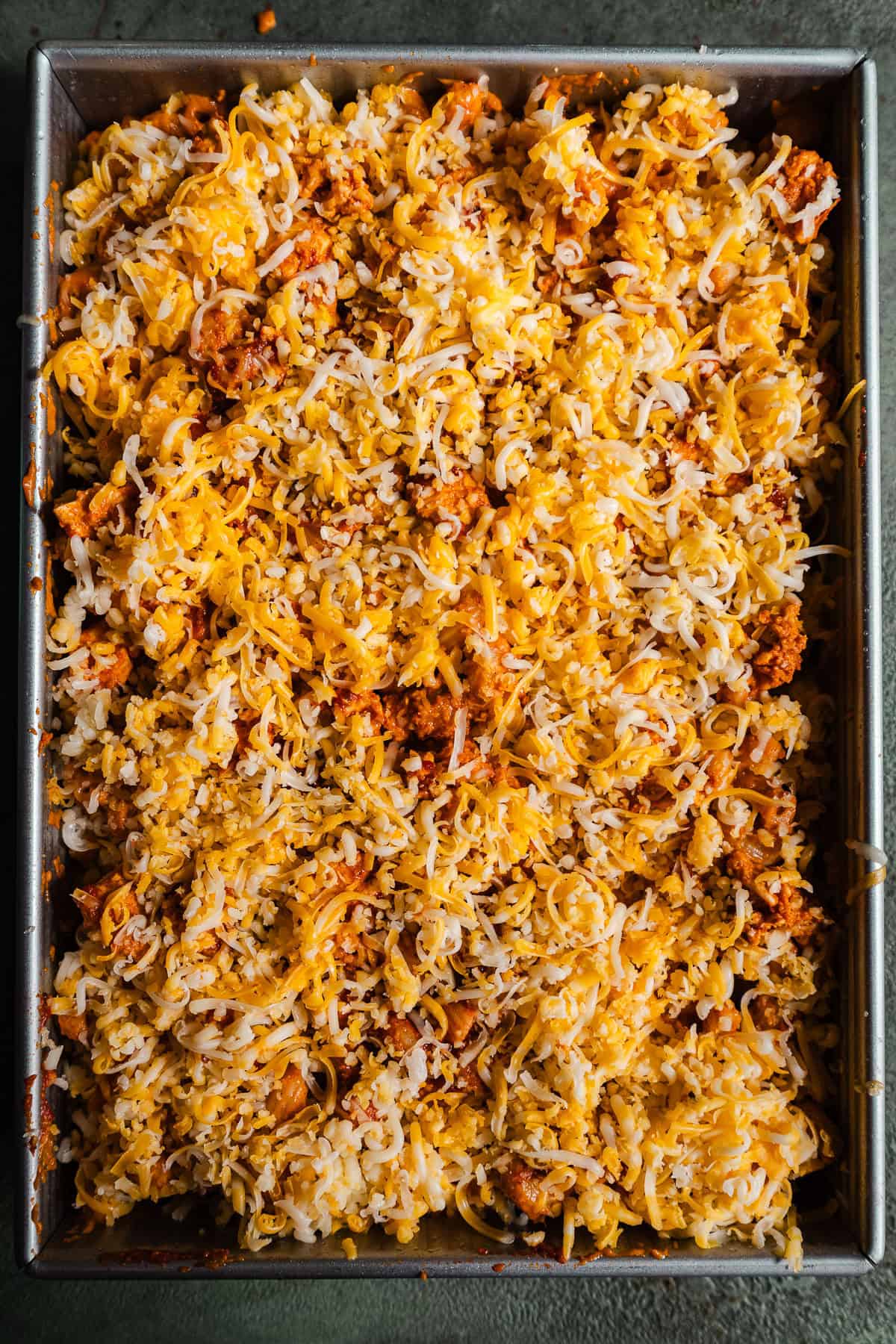
- Step 12: Layer half of the mac and cheese, half of the chicken, and half of the remaining shredded cheese. Repeat.
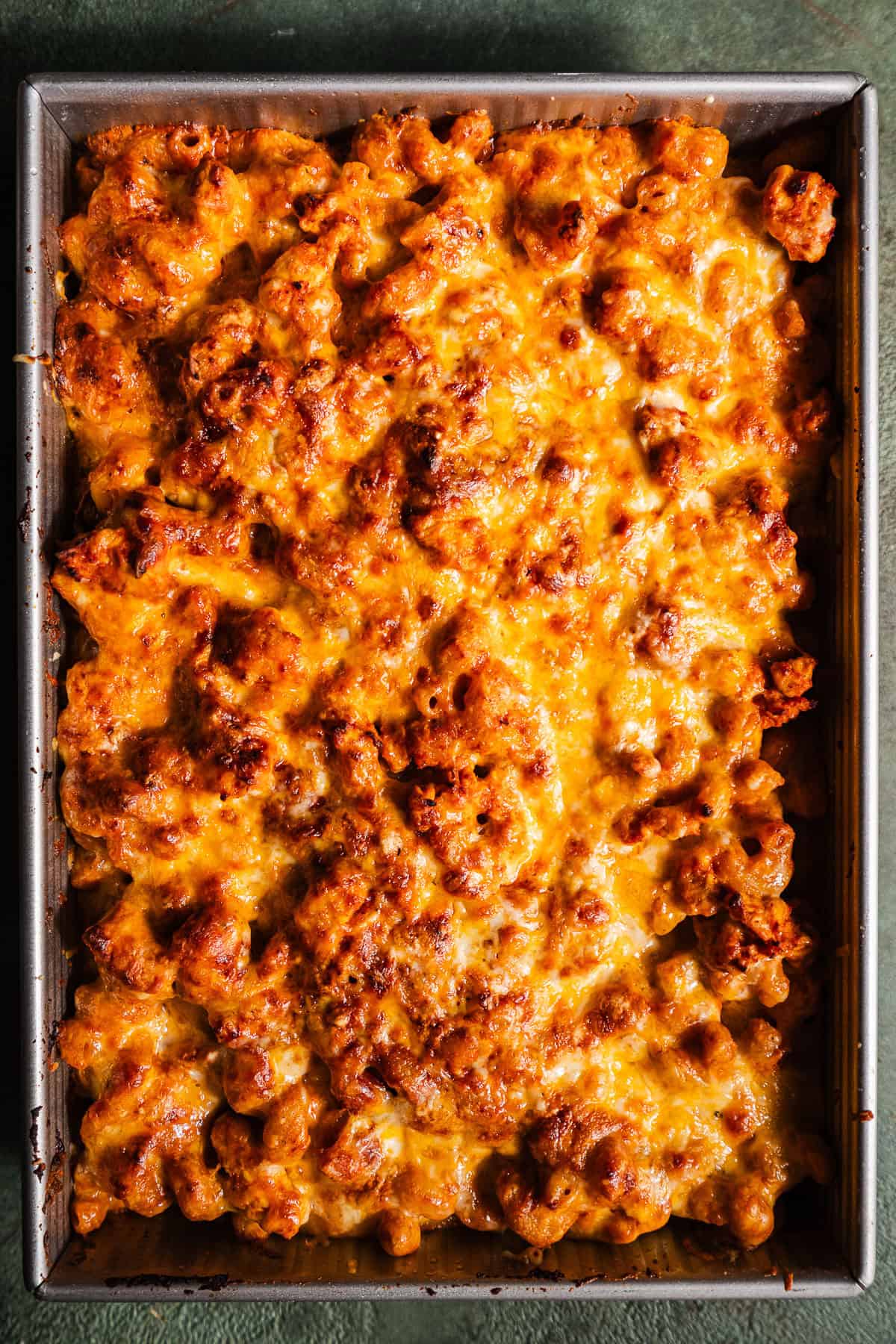
- Step 13: Bake uncovered at 350°F for 20-25 minutes, until the cheese is melted and bubbling around the edges. Broil for 3 minutes, until golden and bubbly.
Rest for 5-10 minutes before serving. Garnish with fresh chives. But serve while hot and ooey gooey!
Tips for Making the Best Homemade Mac and Cheese
Mac and cheese is a relatively simple dish, but a few small techniques make a significant difference in the final texture.
- Always shred your own cheese. Pre-shredded cheese is coated with anti-caking ingredients to prevent cheese from clumping. It can interfere with how cheese incorporates into a sauce and create a less smooth texture. Instead, purchase blocks of cheese and shred with a box grated or food processor.
- Choosing the right cheese combination. Not all cheeses melt the same way. Mozzarella is for the stretchy cheese pull, Colby Jack for a smooth creamy texture, medium cheddar for a cheesy flavor. They all compliment the makhani sauce without overpowering it.
- Cook the roux properly. Whisk frequently until you get a smooth paste that smells lightly nutty. You'll see it start to darken just slightly. This cooks out the raw flour taste and allows the starch to incorporate into liquid. Otherwise, whisking in the evaporated milk can result in lumps that are difficult to remove.
- Gradually add evaporated milk. Once the roux is ready, gradually add the milk while whisking continuously to evenly disperse the flour and prevent lumps from forming. Allow the sauce to thicken to coat the back of a spoon while being pourable before going to the next step.
- Turn down the heat before adding cheese. If your burner is finnicky, you can even remove the pot from heat. Add small handfuls, making sure the cheese has fully melted before adding more. High heat can cause fat and proteins in cheese to separate, resulting in a oily or grainy sauce. It can even cause the sauce to break in the oven, even if you had a smooth sauce before baking.
- Don't overcook the pasta. Cooking shy of al dente, because it'll continue to absorb liquid and cook in the oven. You don't want soft and mushy pasta!
- The sauce texture. The cheese sauce should look looser, because the pasta will absorb a lot of that moisture as it bakes. If it looks perfectly thick, it may end up too dry during baking. Thin with milk.
- Don't overbake. The purpose of the bake is to melt the cheese, not to cook anything through. Don't change the temperature higher than 350°F either! If your oven runs hotter, that can cause your sauce to get oily or grainy.
Common Mistakes
- Grainy Sauce - Means the cheese has separated due to excessive heat which causes the fat to separate from the moisture. Prevent it by reducing the heat before adding the cheese to the makhani cheese sauce, gradually add the shredded cheese, and use cheeses that melt with additional clumping or caking agents. If it's only slightly grainy, whisk in a splash of warm cream to improve texture. Fully broken cannot be restored.
- Dry results - Means that 1.) Pasta was overcooked before baking, 2.) Cheese sauce was too thick before assembly, 3.) Baked for too long.
- Soupy - Means there's too much liquid or the sauce hasn't thickened. When making the roux, allow the evaporated milk to gradually thicken before incorporating the makhani sauce and cheese. The makhani sauce also should be thick. Keep in mind the sauce will thicken as it rests.
- Tastes like flour - The roux hasn't been cooked long enough. Cook for 2-3 minutes over medium heat, whisking continuously. It'll change a shade or two darker and smell slightly nutty rather than like raw flour.
- Lumpy cheese sauce - Develops when liquid is added too quickly to the roux. Add the evaporated milk gradually while continuously whisking.
- Mushy pasta - The pasta continues absorbing moisture in the cheese sauce. Be sure to undercook it, because it'll continue to cook in the oven.
- Too firm after refrigerating - This is normal! The fat in the cheese firms as it cools. Reheat it with a splash of milk or cream to loosen the sauce.
| Ingredient | Benefits | How to use in this recipe |
|---|---|---|
| Sodium citrate | Prevents oily, broken cheese when refrigerated and reheated | Dissolve 10g after adding evaporated milk |
| American cheese | Accessible ingredient with sodium citrate | Replace 4 oz of cheese blend with deli-sliced white American cheese |
| Velveeta | Similar to American cheese, but visually noticeable and very processed | Replace 4 oz of cheese blend with Velveeta |
| Cream cheese | Stabilizers can improve texture and add tang | Whisk in 2 oz of softened full-fat cream cheese before adding shredded cheese |
| Boursin | Flavor addition | Not recommended for this recipe |
| Evaporated milk | Adds concentrated milk proteins to stabilize sauce | Add 1 can (12 oz) to roux |
| Cornstarch | Thickens water to limit separation | Add 1 tablespoon of cornstarch per pound of cheese if no roux. |
Make Ahead Instructions
This recipe has a few components that can be prepared ahead of time, making it easier to assemble on the day you plan to serve it.
- Chicken: Marinate the chicken up to 24 hours ahead of time, keeping it refrigerated. You can also cook the chicken 2 - 3 days ahead and refrigerate it in an airtight container.
- Makhani sauce: Prepare the makhani sauce up to 3 days ahead of time. Refrigerate in an airtight container and gently reheat before incorporating it into the cheese sauce.
- Cheese: Shred the cheese up to 2 days ahead of time and store it in an airtight container in the refrigerator.
- Pasta and cheese sauce: I recommend preparing these shortly before assembly rather than making the entire cheese sauce in advance. The roux-based sauce will thicken as it cools, and reheating it can affect its texture.
- Assemble the mac and cheese: The mac and cheese can be assembled in the baking dish and refrigerated until ready to bake. For the best results, assemble and bake the mac and cheese shortly before serving.
Storage Instructions
When mac and cheese cools, several things happen:
- The fats in the cheese solidify
- The starch in the roux continues to absorb moistures
- The cheese sauce thickens
When reheated too quickly, the fat can separate from the water and separate the oil. No one likes a puddle of oil in their reheated pasta!
The key to reheating mac and cheese is doing it slowly on low heat. A splash of warm cream or milk also helps significantly.
Refrigerator: Store leftover butter chicken mac and cheese in an airtight container for up to 3-4 days.
Reheating in the oven: Transfer the desired portion to an oven-safe dish. Add a splash of warm milk or heavy cream and cover with foil. Reheat at 325°F until warmed through.
Reheating in the microwave: Place an individual portion in a microwave-safe bowl. Add a splash of warm milk or cream, cover loosely, and heat in 20-second intervals, stirring between intervals until heated through.
The additional liquid helps loosen the cheese sauce as it warms.
Why Use a Roux for Mac and Cheese?
One of the biggest discussions around homemade mac and cheese is whether to use a roux, eggs, or neither.
There are plenty of people who prefer egg-based baked mac and cheese, particularly Southern-style versions. However, for this recipe, I prefer a roux-based cheese sauce because I want the finished dish to be creamy, saucy, and easy to scoop rather than firm enough to cut into squares.
The proteins in eggs coagulate as they heat, creating a firmer structure. If that structure becomes too firm, the pasta can feel dry and dense. For this butter chicken version, a roux is the better choice because the makhani sauce is concentrated and the goal is to preserve a creamy sauce that's texturally like a cheesy butter chicken.
A roux is a mixture of equal parts fat and flour by weight, cooked together before liquid is gradually incorporated. In this recipe, butter and flour are whisked together to create a blond roux. Evaporated milk and heavy cream are then added to create a béchamel-style base before the cheese is incorporated.
FAQ
Yes! I recommend preparing the chicken and makhani sauce ahead of time, then making the cheese sauce and assembling the dish shortly before baking. This gives you the convenience of prepping ahead without compromising the creamy texture.
You can, but I recommend making the makhani sauce from scratch for this recipe. Store-bought sauces vary in consistency, sweetness, and seasoning, and some are much thinner than the concentrated sauce used here. If substituting, use the readymade Gymkhana Butter Masala Simmer Sauce.
Absolutely. Monterey Jack, mild cheddar, and young Gouda are all good options. Some people also love sliced American cheese, Velveeta cheese, and cream cheese. I recommend keeping mozzarella in the blend for its stretchy texture and choosing cheeses that melt smoothly.
You can freeze it, but I recommend enjoying it fresh or refrigerated. Cream-based cheese sauces can separate during freezing and thawing, which can affect the texture. If you do freeze it, store it in an airtight freezer-safe container for up to 2 months and thaw overnight in the refrigerator before reheating gently.
I don't recommend it. Fresh mozzarella contains significantly more moisture than low-moisture mozzarella and can release excess liquid during baking. Low-moisture mozzarella gives you a better cheese pull without introducing unnecessary moisture.
More Butter Chicken Recipes to try

Recipe
Want to Save This Recipe?
Thinking about making this recipe? Enter your email and I'll send it straight to your inbox to save for later. Plus, get new recipe inspiration from me every week!
By submitting this form, you consent to receive emails from Masala and Chai.
Baked Butter Chicken Mac and Cheese
Equipment
- Dutch Oven 4qt or larger
- Baking Dish 9 x 13
Ingredients
Tandoori chicken
- 1½ lbs boneless skinless chicken thighs, cut into 1" chunks
- ½ cup plain whole milk yogurt
- 1 tablespoon ginger garlic paste
- 1 tablespoon lemon juice
- 1 tablespoon neutral oil
- 2 teaspoons Kashmiri chili powder
- ½ teaspoon garam masala
- 1 teaspoon ground coriander
- ½ teaspoon ground cumin
- ¼ teaspoon ground turmeric
- 1 teaspoon kosher salt
Makhani sauce bomb
- 2 tablespoons unsalted butter
- 1 bay leaf
- 1 tablespoon ginger garlic paste
- 1 tablespoon Kashmiri chili powder
- ½ teaspoon garam masala
- 1 teaspoon ground coriander
- ½ teaspoon ground cumin
- ⅛ teaspoon ground green cardamom
- ½ teaspoon onion powder
- Pinch ground cloves
- 1 tablespoon tomato paste
- 15 oz tomato puree, passata
- 1 teaspoon kosher salt
- 1 teaspoon sugar
- 1 teaspoon kasuri methi, crushed
- 1 tablespoon butter, to finish
Mac and cheese
- 1 lb cavatappi or macaroni pasta
- 8 oz low-moisture mozzarella cheese, freshly shredded
- 8 oz Colby Jack cheese, freshly shredded
- 8 oz medium cheddar cheese, freshly shredded
- 3 tablespoons unsalted butter
- 3 tablespoons all purpose flour
- 1 prepared makhani sauce
- 12 oz evaporated milk
- ½ cups heavy cream
- ½ teaspoon kosher salt, or to taste
- chives, to garnish
Instructions
Step 1: Marinate the chicken
- Cut chicken thighs into bite-sized pieces.
- In a mixing bowl, combine yogurt, ginger garlic paste, lemon juice, oil, Kashmiri chili powder, garam masala, coriander, cumin, turmeric, and salt. Add chicken and toss until thoroughly coated.
- Cover and refrigerate for at least 30 minutes, ideally 2-4 hours or overnight.
Step 2: Cook the chicken
- Remove chicken from the refrigerator about 15 minutes before cooking.
- Heat a large cast-iron skillet over medium-high heat with a little neutral oil. Working in batches, add chicken in a single layer. Avoid overcrowding the pan.
- Cook on both sides until deeply browned on the outside and cooked through to an internal temperature of 165°F. Transfer to a plate and let rest for a few minutes.
- (Grill) Preheat the grill to high. Skewer the chicken and cook on all sides until charred and cooked through, around 8-10 minutes.
Step 3: Prepare the makhani sauce bomb
- In the same pan, heat butter over low to medium heat. Add ginger-garlic paste and bay leaf and sauté for 30-45 seconds until fragrant.
- Add tomato paste and cook for 3-5 minutes until it darkens slightly. Add a splash of water if it starts to burn.
- Stir in the Kashmiri chili powder, garam masala, coriander, cumin, onion powder, green cardamom, and clove. Bloom the spices for about 30 seconds.
- Pour in tomato puree and salt. Simmer uncovered for 12-15 minutes, stirring occasionally, until thickened and the raw tomato flavor has cooked out. The fat will start to separate on the sides when it's ready.
- Remove the bay leaf. Add the sugar. Crush the kasuri methi between your palms into the pot. Finish with 1 tablespoon butter.
- Yield = 1 cup of concentrated makhani sauce. Set aside for the mac and cheese.
Step 4: Prepare the pasta
- Preheat oven to 350°F. Butter a 9-by-13-inch baking dish.
- Bring a large pot of salted water to a boil. Cook the pasta according to boxed instructions until about 1 minute shy of al dente. It will continue cooking in the oven.
- Drain and set aside.
Step 5: Make the makhani cheese sauce
- While the pasta boils, combine the shredded mozzarella, Colby Jack, and cheddar cheeses in a large bowl. Divide the cheese mixture in half.
- In a large saucepan or Dutch oven, melt butter over low to medium heat. Add flour and whisk continuously for 2-3 minutes to create a roux.
- Once the roux slightly darkens, slowly pour in evaporated milk, whisking constantly until smooth and thickened.
- Add 1 cup of the prepared makhani sauce and whisk until evenly incorporated. Add heavy cream. Continue whisking.
- Reduce heat to low. Gradually add half of the shredded cheese mixture, stirring until melted and smooth with each addition.
- Taste the sauce before proceeding. If the tomato is overpowering, add a little more cream.
- Add cooked pasta to the cheese sauce and toss until every piece is coated.
Step 6: Assemble
- Transfer half of the mac and cheese into the prepared baking dish. Scatter half of the cooked chicken over the pasta. Sprinkle with a generous layer of shredded cheese.
- Add the remaining mac and cheese. Scatter the remaining chicken over the top. Finish with the remaining shredded cheese.
Step 7: Bake
- Bake uncovered at 350°F for 20-25 minutes, until the cheese is melted and bubbling around the edges.
- Switch the oven to broil for 2-3 minutes to create a golden, bubbly cheese crust. Watch carefully. Remove from the oven and rest for 5-10 minutes before serving.
- Serve immediately while the cheese is still gooey.
Leave a Reply