

Learn to make thick, creamy Dahi (curd), with just two ingredients - whole milk and a yogurt starter. This traditional method and technique was passed down by my great-great grandmother and results in a smoother, richer yogurt than store-bought versions. Make it once, and keep it going indefinitely.
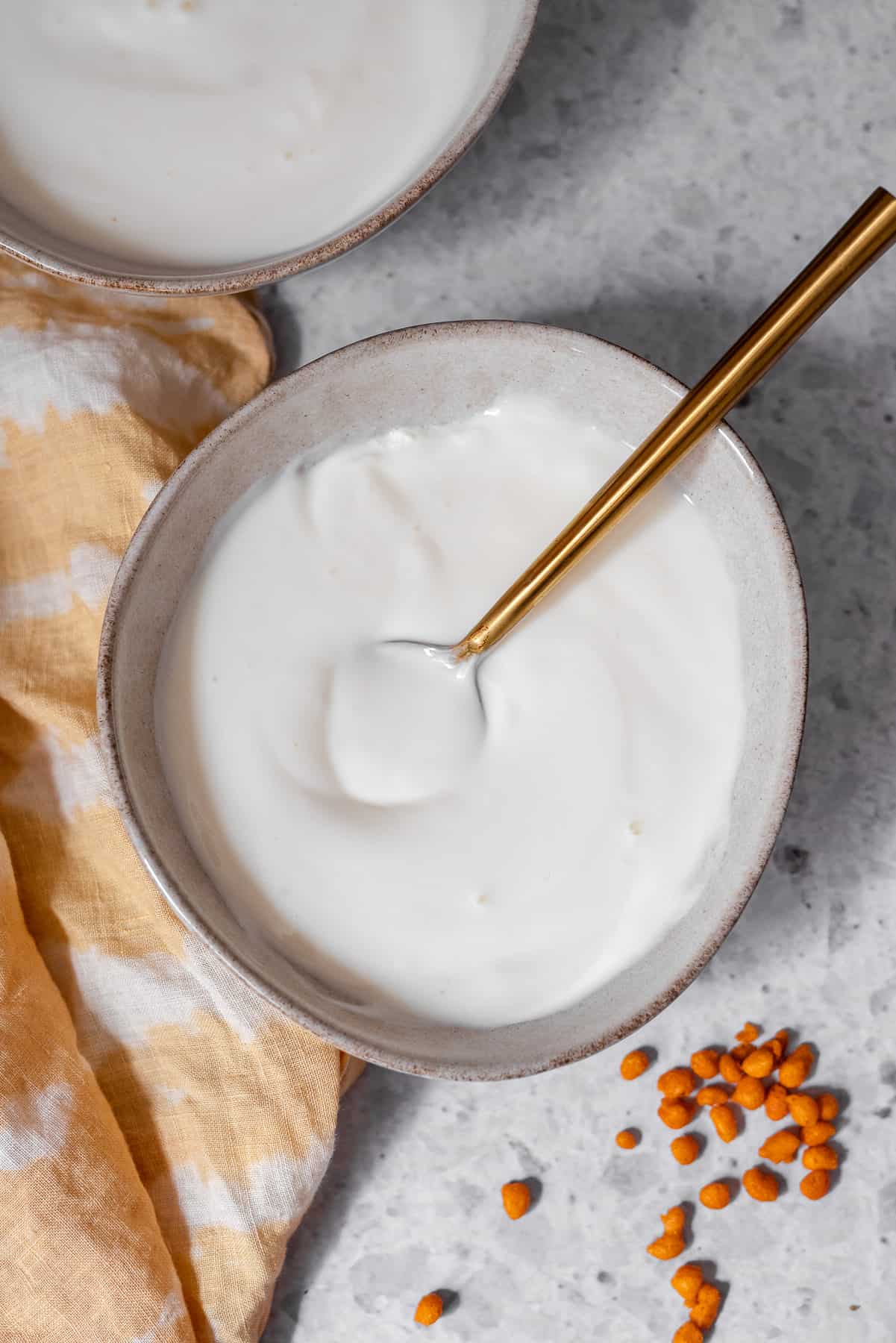
This traditional method creates a smoother, tangier yogurt than most store-bought options. It's simple, reliable, and once you get the hang of it, you'll never need to buy yogurt again.
No Instant Pot required for "instant yogurt"!! There's some charm in doing things the old school way with Indian traditions and techniques passed down from generation to generation.
My mom learned how to make dahi in India from her great-grandmother in clay pots with fresh buffalo milk. Indian women are the queens of scratch made ingredients - we always had homemade chutneys, achaars, yogurt, freshly dried herbs, and we would even dry out spices and grind them ourselves.
Making dahi at home really only takes about 10-15 minutes of being involved. At the end, you have thick, creamy luscious homemade curd at a fraction of the price in-store. The ingredients are also super accessible - just whole milk and a yogurt starter!
Jump to:
What is Dahi?
At a glance, dahi looks like regular yogurt - but the process and flavor are quite different, much like how skyrr is not just any yogurt.
Dahi, translated to curd, is cultured milk that is boiled, frothed, and mixed with a starter to make an Indian-style yogurt in the Indian subcontinent.
The milk is first brought to a boil, which changes it's structure and leads to a richer, thicker set yogurt. The distinct bacteria from the starter also develops a smoother, fresher, and less acidic result than most commercial yogurts.
Most Indian households make their own homemade yogurt on a weekly basis. We use it to serve as a side with dal (lentils) and roti, lassi, added into curry for a bit of creaminess, and even to marinate meat or paneer to make it extra tender. Once we reach the end of the dahi, we save a spoonful as a starter to make more for the next week.
Ingredients for Homemade Curd
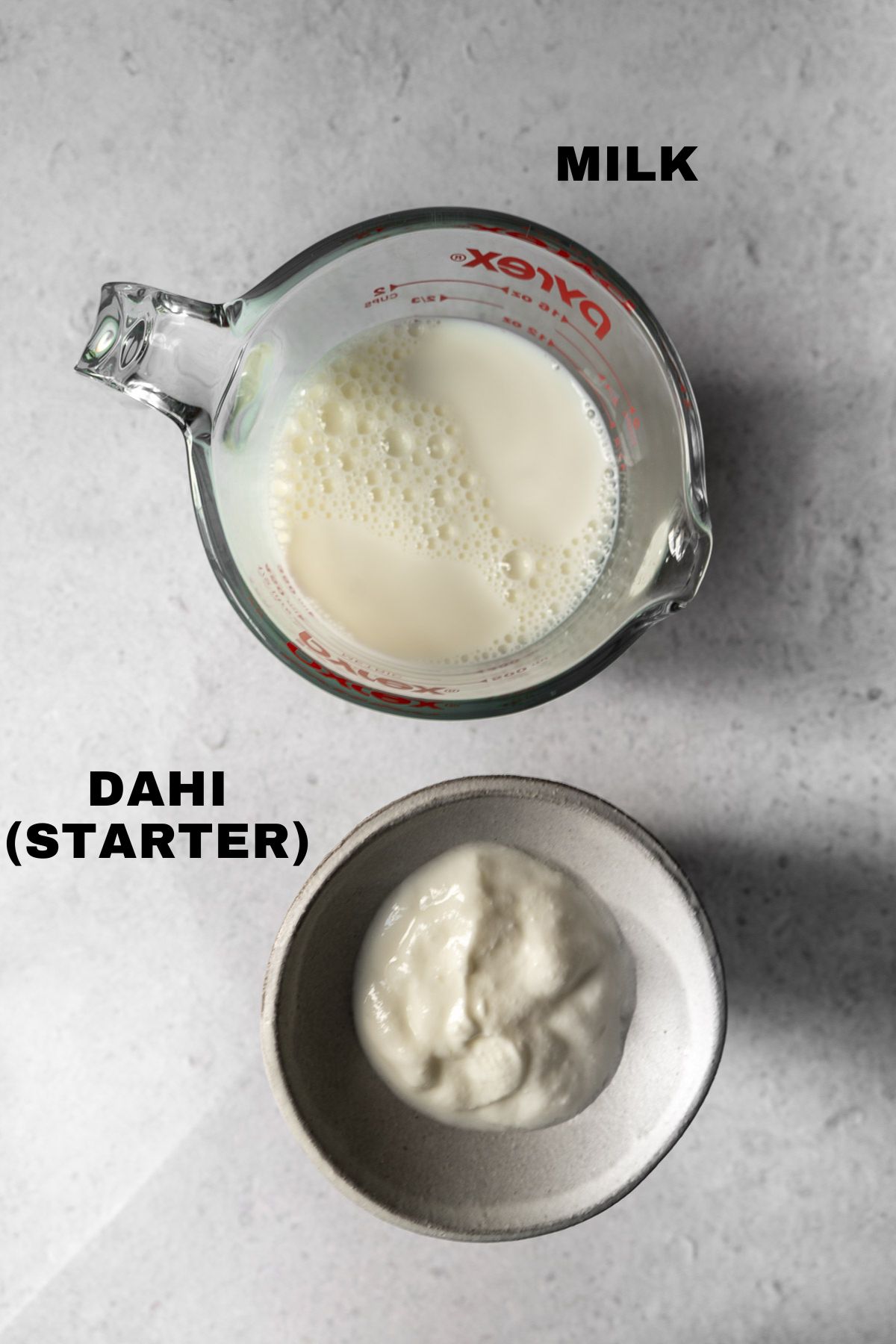
- Milk - Use plain whole milk to make dahi. The higher fat content creates a thicker, creamier set. Do not use fat free, 2%, plant-based, or any other types of milk because they won't yield the same texture and they may not set at all.
- Starter - The yogurt starter is a bacteria culture which helps the milk solidify into a creamy yogurt. It's just a scoop of dahi.
If you're making it for the first time:
- Use fresh dahi from an Indian grocery store, or
- Borrow some from a friend or family member, or
- Visit a local Indian restaurant
Once you have your first batch, you can reserve a spoonful to use as your starter going forward. In our family and friends circles, all the aunties borrow a bit of each other's dahi for a new starter.
The Three Components to the Best Yogurt
Your quality of perfect dahi will depend on three things:
- The milk. The best milk to use is farm fresh buffalo or cow milk with full-fat. Otherwise, use whole milk from the grocery store.
- The starter. The best dahi is really dependent on the starter. The dahi shouldn't be too sour.
- The weather. Dahi can be made year-round, however, the amount of starter used and the resting time is dependent upon the weather. The starter thrives at a warmer temperature and the yogurt sets faster when warm. It can take more starter and time to solidify in cooler weather. Too hot and the bacteria will die.
How to make Dahi or Curd at home
Making dahi is so easy that a lot of people even do it daily. If you're making it for the first time, then you'll come to see really how accessible dahi is and how simple it is to troubleshoot.
1. Boiling the Milk


Rinse a heavy bottom pot really well. You can lightly oil or brush butter around the bottom and sides to prevent the milk solids from sticking and burning.
- Pour in the milk and bring it to a boil on low to medium heat.
- Keep stirring the milk to prevent the milk from burning. The milk will start to form a layer of malai (cream) at the top. You can choose to mix this in to the milk or allow the cream to develop.
- Once the milk comes to a boil, you'll see a ton of tiny air bubbles. Reduce the heat to a low flame and let the milk simmer briefly after boiling - this improves the final thickness and flavor of the dahi.
2. Cool and Aerate
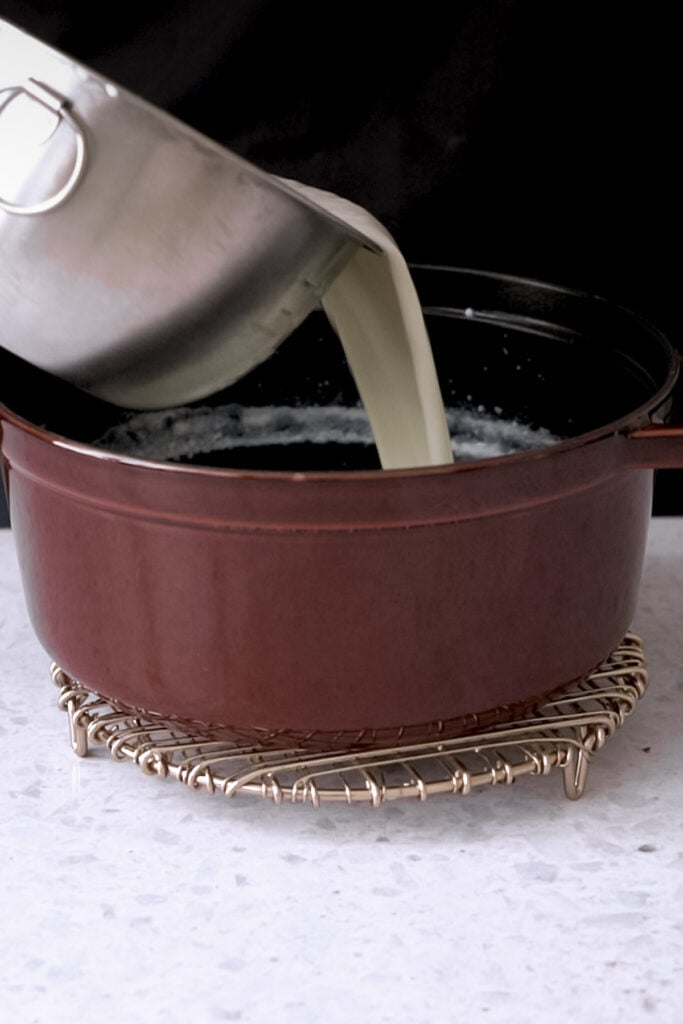
- Remove the heavy bottom pot from heat and allow the milk to cool until it's warm to the touch, or about 135°F.
- Pour the milk from the heavy bottom pot into a clay pot or a bowl that you'll store the dahi in. Start with the pot as close to the bowl as possible, and continuously pour the milk while moving the pot higher and higher. This transfer is called pulling the milk which aerates it and helps evenly distribute fat for a smooth, thicker set. It may be a bit messy so have a towel on hand.
- Do this one more time, transferring the milk from the bowl back to the heavy bottom pot.
3. Mix in the Starter
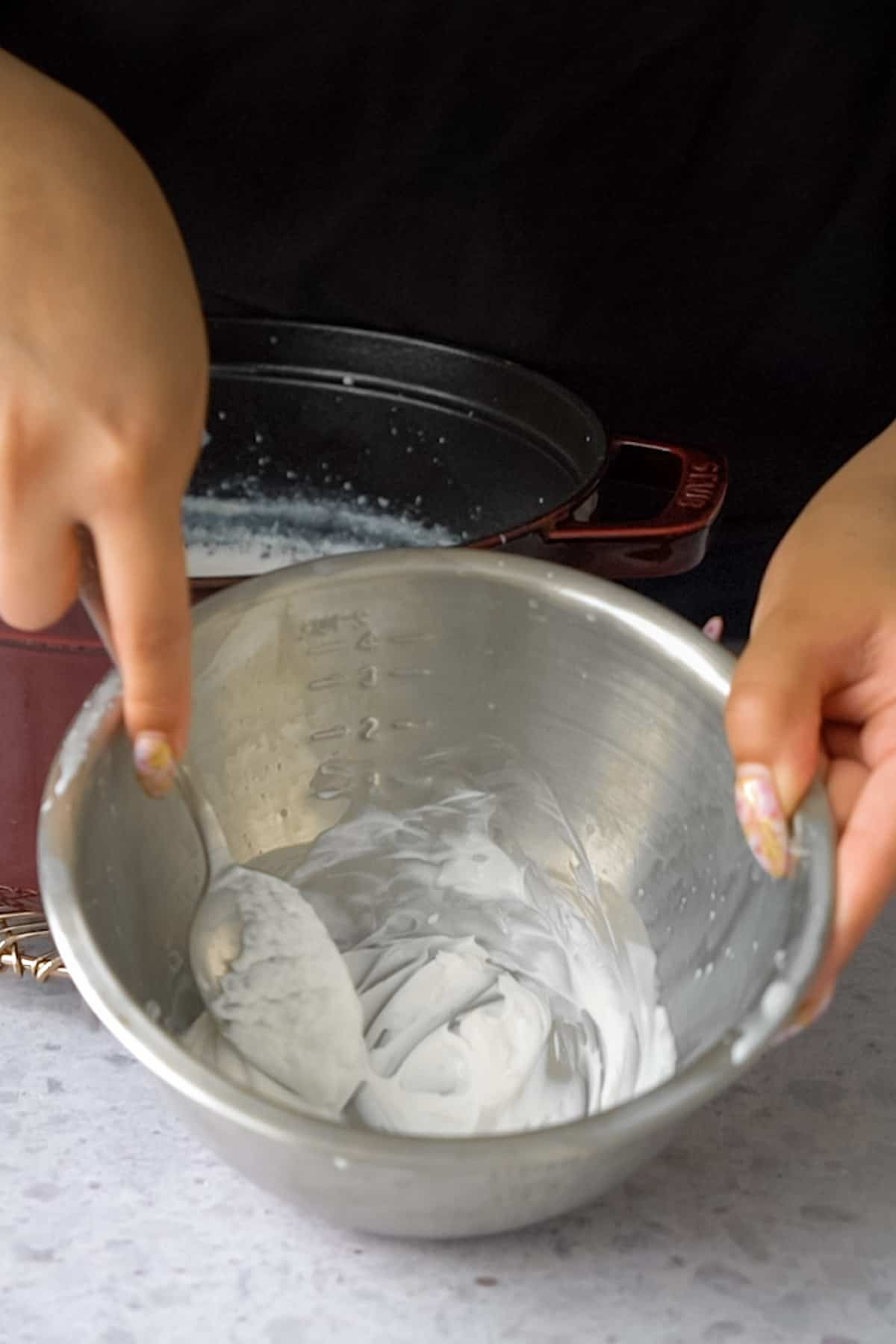
- Add a teaspoon to a tablespoon of starter into the clay pot or bowl that you'll store the yogurt in. Mix the starter super well with a spoon so it's smooth and covers the bottom of the bowl.
- Pour the milk back into the bowl from the heavy bottom pot, using the same pulling technique.
- Give the milk a quick stir to ensure the starter is mixed throughout.
4. Cover and set
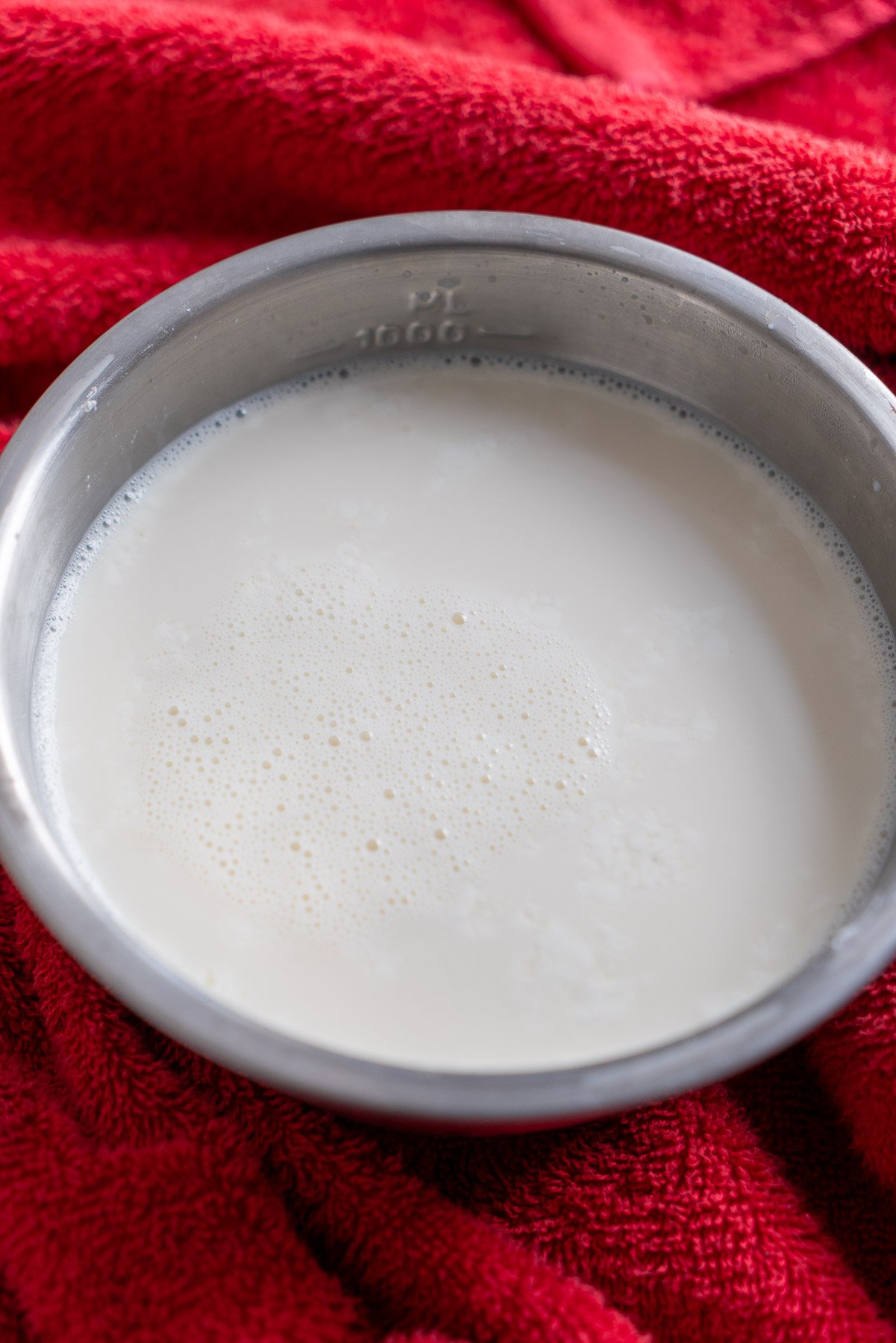
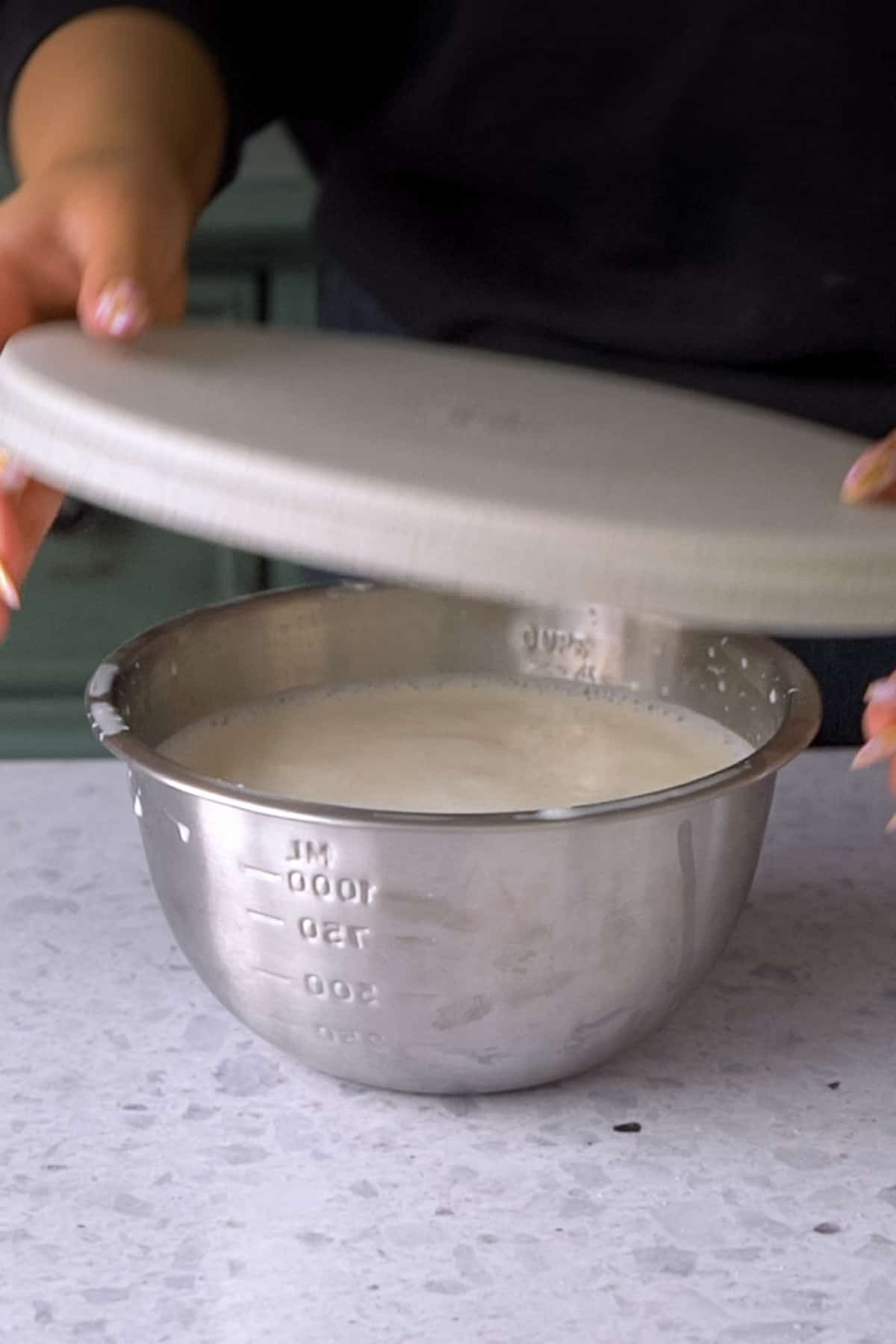
- Cover the yogurt with a lid and wrap it tightly in a towel to allow it to set for 6-10 hours.
- After the curd has set, refrigerate it to stop further fermentation.
Pro tip
If it's warm, the dahi will only need about 6 hours to set. If it's cooler, it will need about 10 hours to set and should be kept in a warm place like the oven. Avoid moving or disturbing the bowl until the yogurt has set.
Why Boiling and Aerating Matters
The milk should be brought to a temperature of at least 180°F or the boiling point at ~200°F before fermenting the milk. The act of boiling the milk improves the texture and richness of the yogurt. The "good" bacteria will consume the lactose, turning the lactose sugars into lactic acid, which traps the fat into a thick, creamy yogurt that's a bit tart in taste. Heating the milk also kills any bad bacteria in the milk.
The purpose of frothing the milk is to disperse the bacteria with the fats throughout the milk instead of letting the cream layer form at the top so it's rich and smooth throughout the curd.
Expert Tips and Tricks
- Sour dahi can still be used in lassi or Kadhi. Once it becomes slimy, it should be thrown away. Use it ideally within a week, at the most two weeks.
- Use full fat milk or whole milk only. This will work with 1% or 2% milk, but it won't be as rich and may be too sour. This won't work with plant-based milk.
- Temperature matters most when mixing the culture. It should feel hot to the touch.
- Once the culture has been mixed, put a lid on it and wrap it in a towel and leave it alone. Do not disturb the milk. Leave it in the oven to conserve the heat.
- Always saves a spoonful for your next batch.
Troubleshooting
Using Greek yogurt as a starter may result in sticky or slimy curd. It ultimately depends on what you're using as a starter. I highly recommend asking someone else for a bit of dahi as a starter, whether it's a family friend, a local Indian restaurant, or purchasing a container of dahi from an Indian store to make your first ever batch.
It's almost like sourdough starter - you either make your own which you nurture for years, or you borrow someone else's.
The yogurt will be slimy and smell bad. The fresh starter should be no older than 1 week old. The bacteria can become slimy and will need to be discarded.
In the hotter months, you only need about a teaspoon of starter because the bacteria prefers warmth. In the cooler months, use at least a tablespoon.
This can happen for a few reasons. The milk temperature was too low, the starter was too weak, or the environment was too cold.
If it doesn't set, you can put the milk in the microwave for 3-4 minutes or reheat to 135°F, add more culture, and wrap it in a towel and keep in a warm place. This won't yield the best dahi, but you can still use it as a starter for another batch, use it as a marinade, or mix into Kadhi.
You can continue saving a tablespoon of starter from the previous batch of dahi indefinitely if maintained well and used within a week of making the most recent batch.
Dahi will start souring after 5 days. The culture should be used within 7 days of making a fresh batch of dahi. If you don't plan on making another batch within the week, freeze a tablespoon in an airtight container for up to two months. Typically you should never freeze yogurt and thaw it out again, but this is such a small amount it's usually okay.
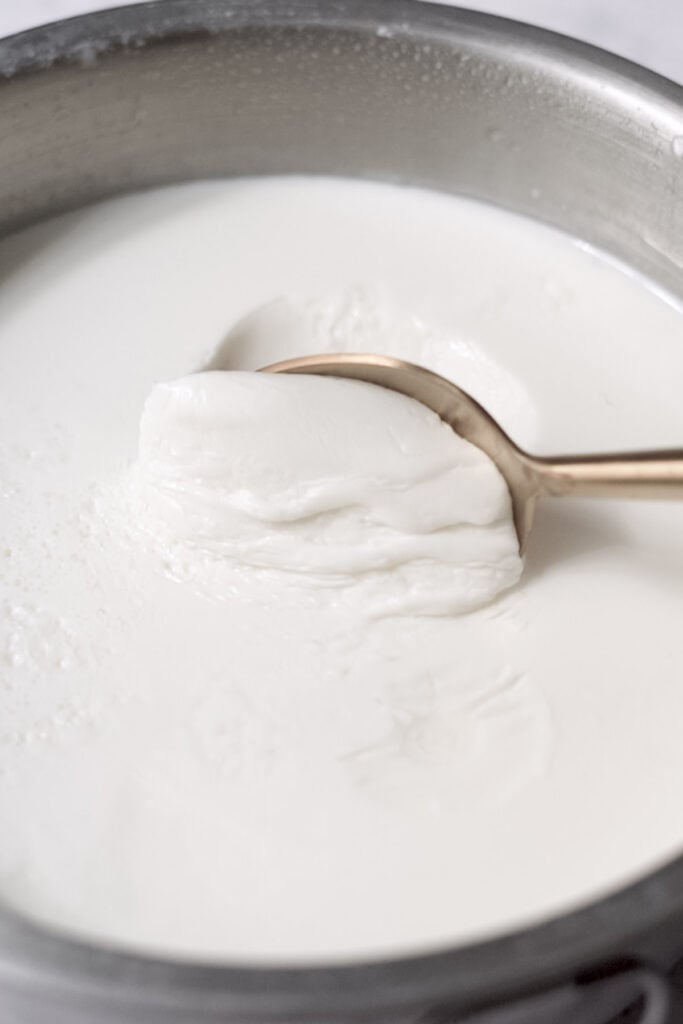
This is completely normal. The liquid in the dahi is whey, which is incredibly nutritious but very tangy. You can drain a bit of the whey and add it into smoothies or mix it into some of your cooking.
My mom also recommends mixing it into doughs because it will result in fluffier and softer breads.
Recipes to try that use Dahi
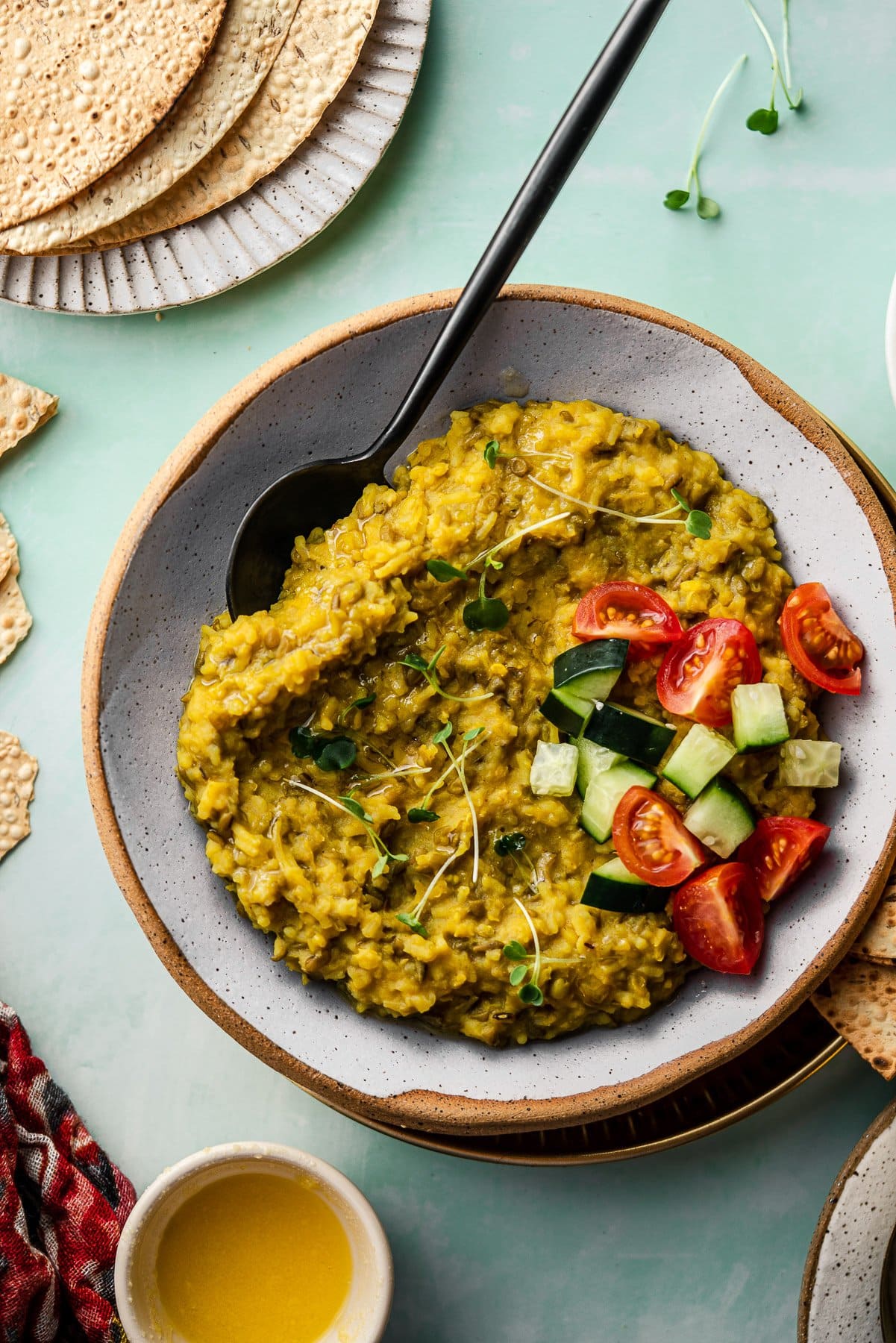
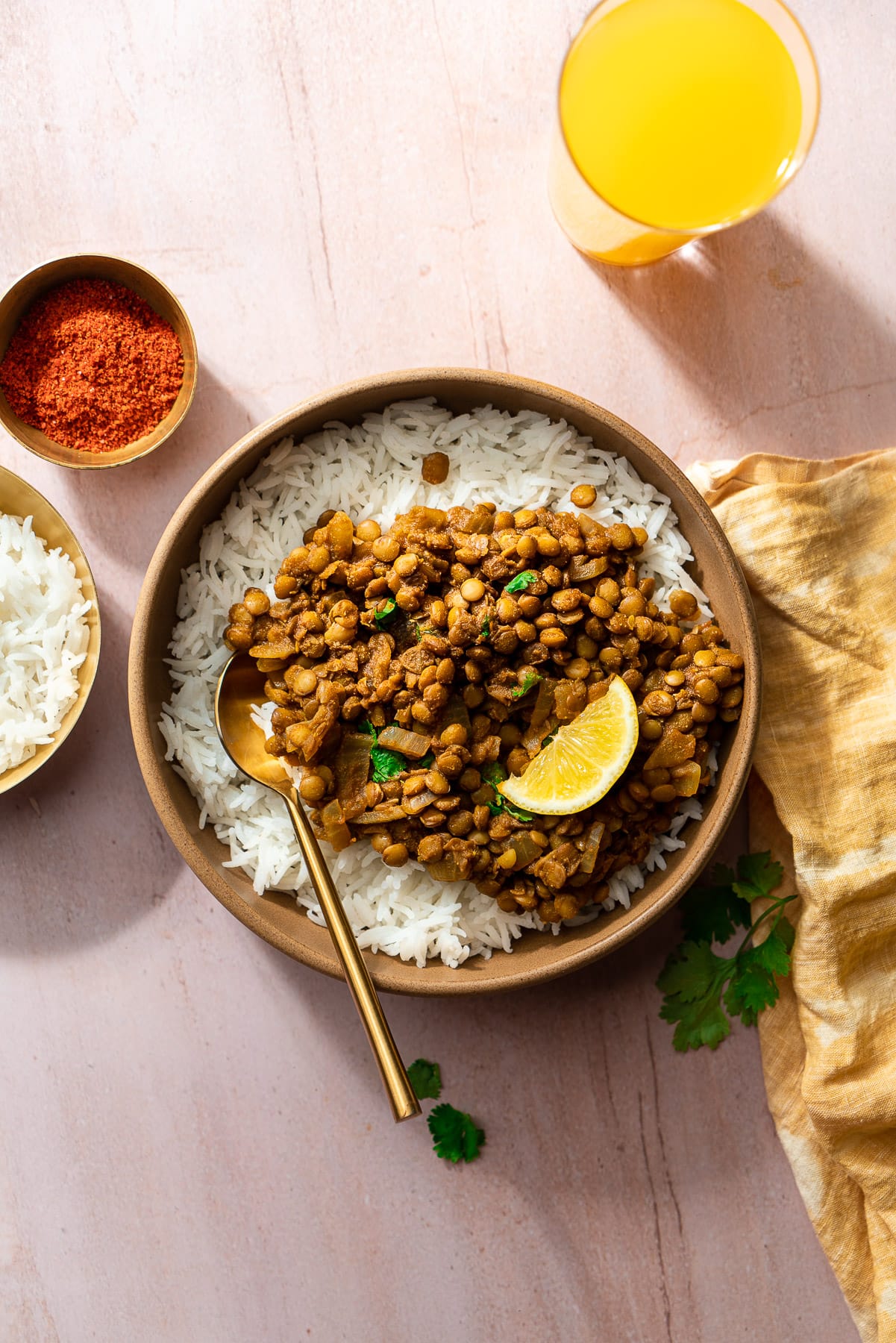
Dahi is an incredibly versatile ingredient that can be used in several ways. It's also used as a base for several side dishes, mixed in doughs, used in marinades and curries, or blended into lassis. Here's a few recipes to check out using dahi:
As an ingredient


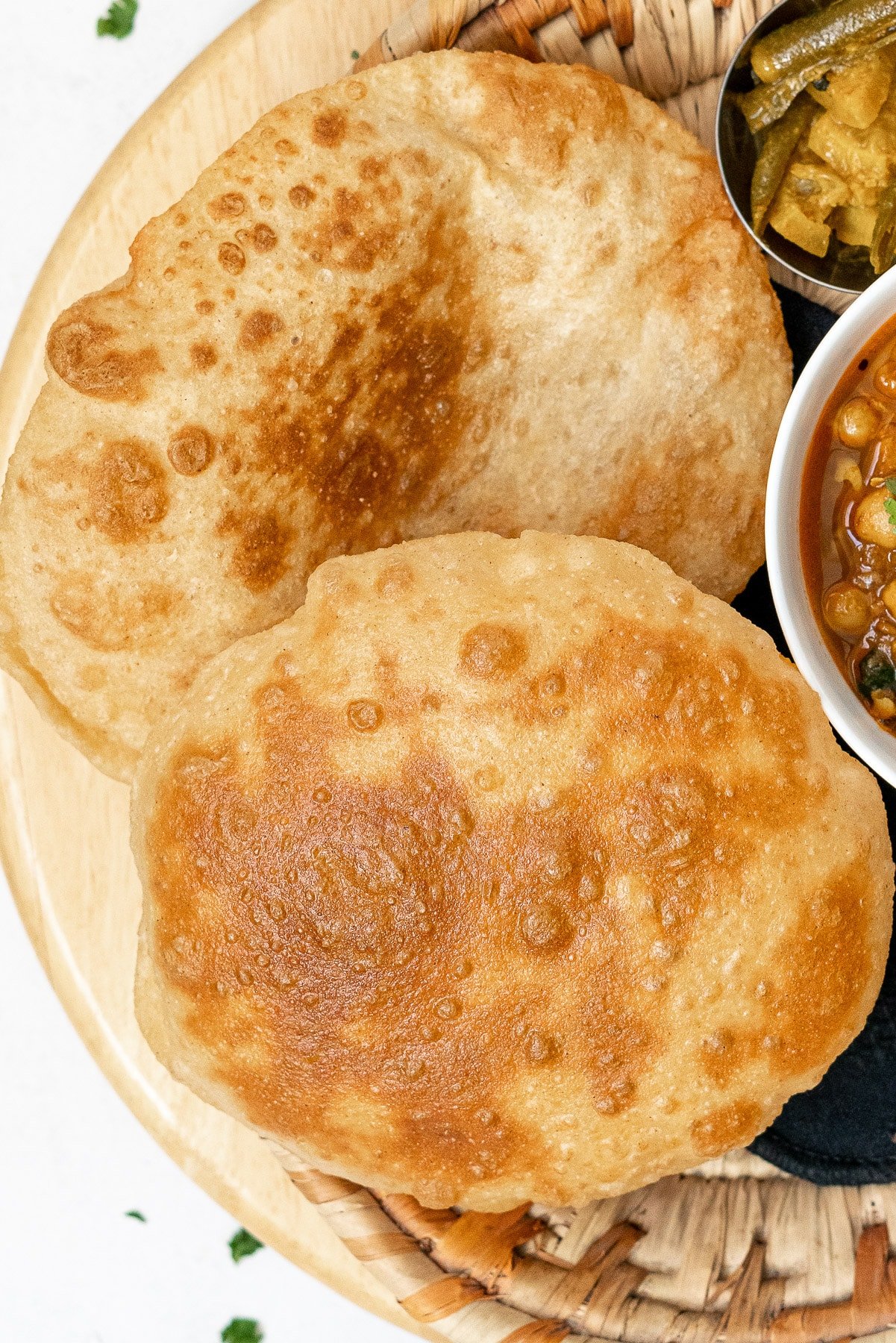

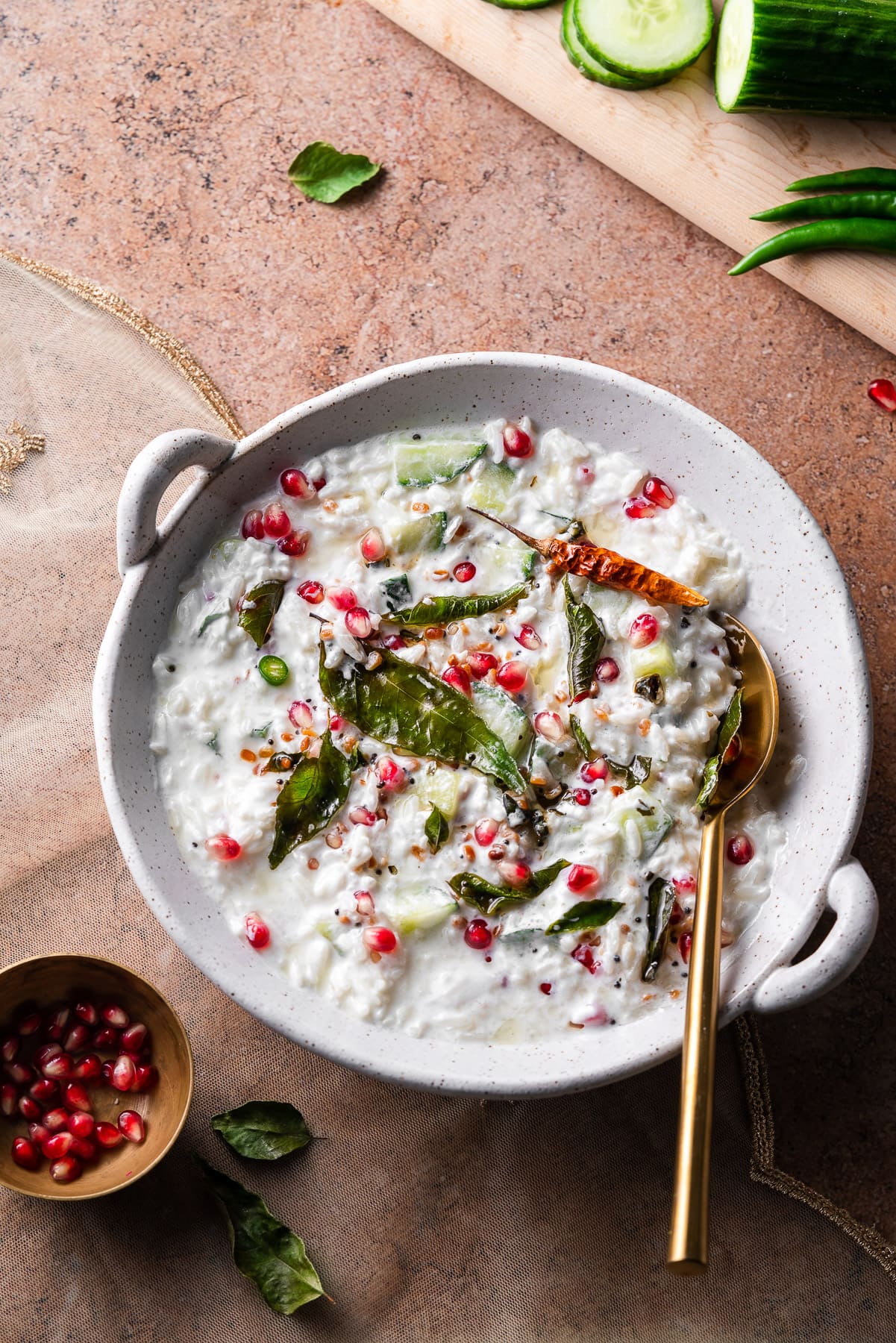
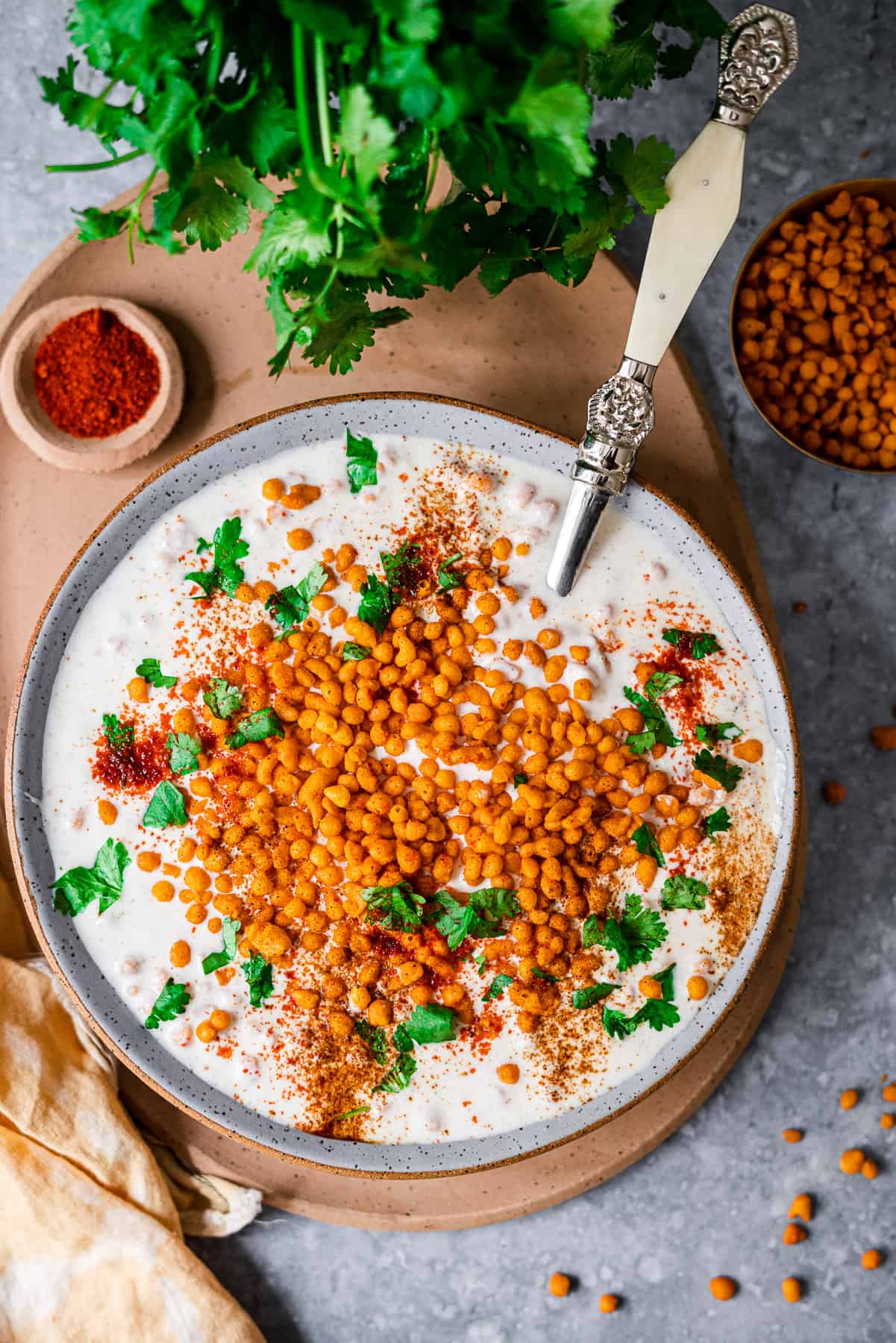
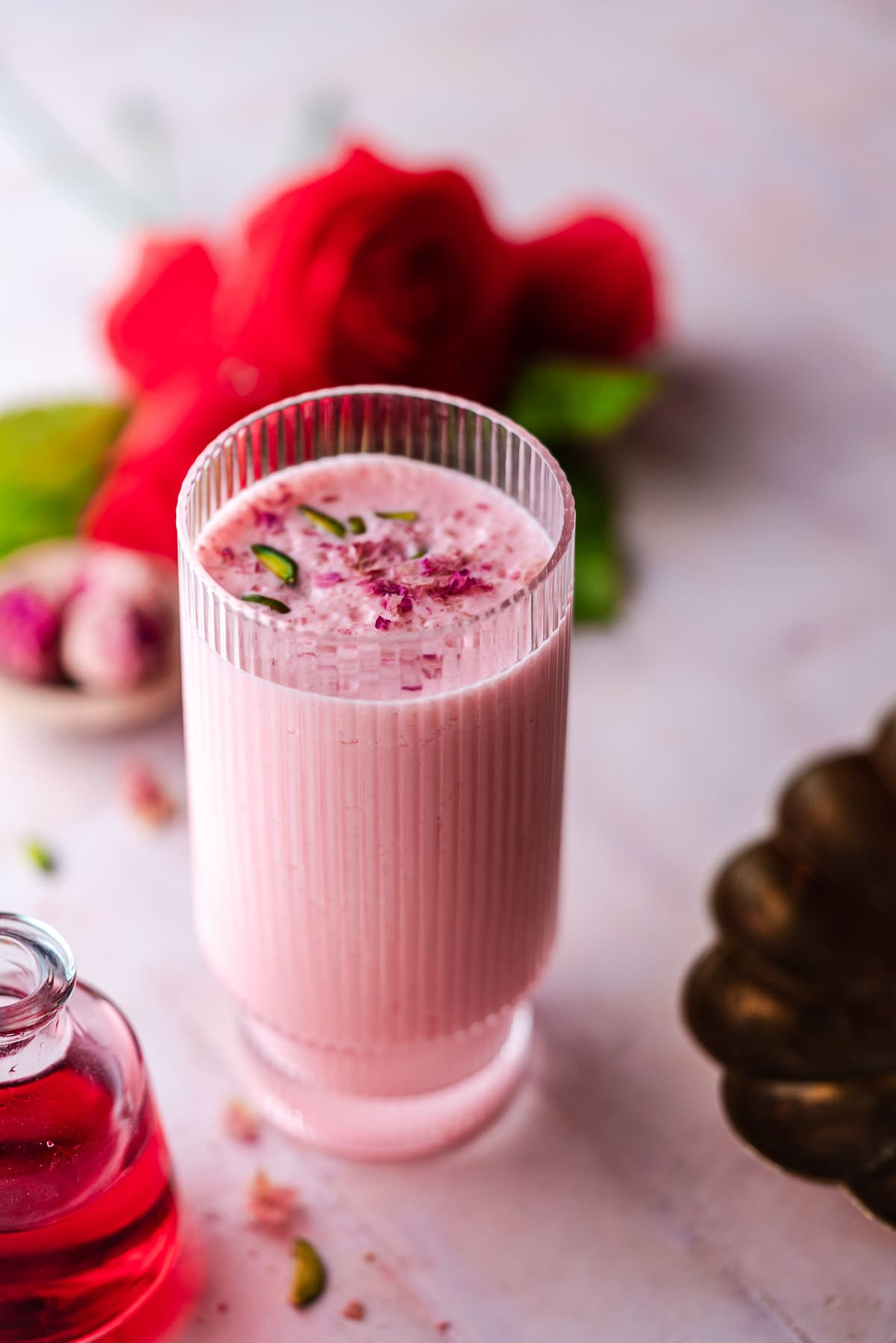
To marinate meat




Serve as an accompaniment


Storage
- If not using within a week, freeze a small portion of starter for later use
- Store in the refrigerator for up to 5-7 days
- Save 1 tablespoon as a starter for your next batch
I have to say, I'm extremely grateful for Masala and Chai. I'm not sure I would take the time to learn traditional Indian recipes without it. Now I'll get to pass off these recipes to my kids, and of course to all my readers!
Recipe
Want to Save This Recipe?
Thinking about making this recipe? Enter your email and I'll send it straight to your inbox to save for later. Plus, get new recipe inspiration from me every week!
By submitting this form, you consent to receive emails from Masala and Chai.
Dahi (Indian Curd Yogurt)
Recipe Video
Equipment
Ingredients
- 4 cups whole milk
- 1 tablespoon yogurt starter
Instructions
- Heat a heavy bottom pot on medium heat. Pour in the milk and bring to a boil while stirring in intervals and scraping the sides to avoid burnt milk. You're looking for a lot of air bubbles.
- When the milk reaches it's boiling point, remove the pot from heat and cool to about 135°F, or when you can comfortably touch the warm milk.
- Once the milk is at 125 - 135°F, slowly pour the milk from the heavy bottom pot into a medium sized bowl. Start as close to the medium sized bowl as possible, and slowly pour in the milk as you raise the heavy bottom pot higher and higher while continuously pouring the milk. This is the first pull.
- Repeat. Pour the milk from the medium sized bowl back into the heavy bottom pot, starting as low as possible and continuously pouring the milk while raising the bowl higher and higher.
- In the empty bowl, add a tablespoon of yogurt starter and mix it until smooth and coating the bottom.
- For a third time, pour the milk from the heavy bottom pot back into the bowl in the same fashion, starting from low and moving higher and higher. This should create a ton of air bubbles.
- Stir the milk to fully combine the yogurt starter with the milk.
- Cover the bowl with a plate. Wrap the bowl with the plate on it with a towel and store at room temperature (~73°F) or in a warm place like the oven for up to six hours undisturbed.
- After the sixth hour, carefully unwrap the towel and uncover the lid. Check for a thick, jiggly consistency by gently shaking the container to see if the dahi has set.
- Once the dahi has set, transfer the bowl to the fridge and chill for a minimum of an hour before serving.
Notes
- Yogurt starter refers to a scoop of dahi from a previous batch or from someone else's dahi. A scoop of plain, full-fat Greek yogurt also works but may result in slightly slimy dahi.
- Store the dahi in the fridge for up to 5-7 days with a lid.
- Save a tablespoon of the dahi as a starter for the next batch.
Dustin Adams says
I have not tried the recipe, but I will! I am OBSESSED with Mango Lassi and have been wanting to make it at home because it's really expensive at the Indian restaurant. If I don't have Dahi starter, could I use live culture plain yogurt? While I know it wouldn't be true Dahi, it should be pretty close, right?
Shweta Garg says
Hi Dustin! I've had success using plain whole milk yogurt for a starter, absolutely! It was kind of slimy in texture but not too noticeable and ultimately won't reaaaally taste the same. -Shweta
Lindsey says
Thank you so much for this post! I am in the process of making your Butter Chicken recipe and I thought to myself, "eh...what's the difference I'll just use Greek Yogurt," but NO!!! I am so glad I took the time to read this recipe and explanation of Dahi.
It was actually super easy for me to find at my local Indian market, too, and the owner was so excited to hear that I was excited about using these traditional ingredients!
And now I am planning to keep an extra scoop on hand so I can make my own! Thanks for all the extra tips, too! I was wondering about freezing any leftover yogurt and I see you answered that for me in the FAQ!
RK says
Approximately what temperature does the milk cool down to after you froth it and its ready for the starter? I've gotten the boiling part down but I'm still having issues with my dahi setting.
Shweta Garg says
About 125F.
RK says
Any idea why my dahi won’t completely set? Like it’s usually 80-90% set and rest is the whey. In the past when I did it, it would set beautifully but after letting my mom do it for me and trying to do this again, I can’t seem to get it to that perfection anymore. Is it the amount of starter I use or temperature of the milk when putting starter in or the amount of time I leave it? I’ve left it for 12 hours and it still is like that. The interesting part is that even after 12 hours it won’t get tart either. It’ll be a very mild taste. Appreciate any insight you might have.. this seems to be a great mystery for me.
Shweta Garg says
Where are you getting your starter from? It sounds like it’s no longer viable and you may need a new one, especially if it isn’t tart dahi. It can also be the temperature as it’s setting, it needs to be warm as it sets. During the winters, mine can take up to 8 hours to set so I usually leave it in the oven in plenty of towels. And you’re using whole milk, right?
Feel free to DM me on Instagram with an image so I can take a look!
Lydia says
This was so easy and delicious!! Can't wait to make more.
Shweta Garg says
So glad to hear that!!
Ann says
What do you think about using an unglazed clay pot to make dahi? My mother never used one - she tends to use stainless steel or plastic containers. I've been using stainless steel, but it retains a lot of moisture. I don't want to use plastic. The unglazed clay pot seems like it will absorb the excess moisture but I'm worried about bacteria hanging out inside the semi-porous clay material. What do you think?
BTW, I love your site - some traditional indian recipes (explained by a first-generation 'Indo-Canadian/American) and some fusion recipies - can't wait to try them!). The Chole Bhature takes me back to my childhood (my mom rolled the bhature, while I fried them...didn't enjoy making them but loved the taste).
Do you have a good recipe for mattar paneer?
Shweta says
I had to ask my mom this - according to what her grandmother did in old times, they used unglazed clay pots but they have to be seasoned first, aka covered in oil or butter on the inside and baked at high temperatures for 20-30 minutes. This is so the dahi doesn’t smell/taste like earth, but it’ll still change the flavor of the dahi. I absolutely do not recommend plastic, and stainless steel does not retain moisture in our experience.
And thank you so much! I really appreciate that!
Ann says
Interesting about the seasoning...good to know!
Ann says
When I make the yogurt, after it has been left to set for 8-10 hours, there is a layer of whey on top. The rest is set. Why does this happen?
Shweta says
This is completely normal, don’t worry about it! Here’s a great article on why this happens - https://spoonuniversity.com/lifestyle/water-top-yogurt-surface-whey.
Ann says
Thank you for the explanation! I thought maybe it was because my milk was too hot or I left it out too long. Good to know it is normal.